
McKinney summers are no joke. Once temperatures along US-75 start climbing and the heat settles over communities like Craig Ranch and Stonebridge Ranch, a well-functioning air conditioning system goes from a comfort to a necessity. Staying on top of regular maintenance is what separates a system that keeps your home cool all season from one that fails during the hottest stretch of July.
Our McKinney air conditioning services team sees the same preventable issues year after year. The good news is that most of them come down to consistent upkeep. Here is what every McKinney homeowner should know.
How to Change Your AC Filters Effectively
Changing your AC filters on a regular schedule is one of the simplest and most impactful things you can do for your system. Most filters need to be replaced every one to three months, depending on usage, the type of filter, and whether pets or allergens are a factor in your home.
From our service calls throughout McKinney, one of the most common causes of reduced airflow and poor indoor air quality is a clogged, overdue filter. A clean filter does more than just protect your lungs. It allows your system to breathe freely, reducing strain on the blower motor and keeping energy consumption in check. Homeowners who fall behind on filter changes often see the consequences show up first in their utility bills, and eventually in their equipment.
When selecting a replacement, pay attention to the MERV rating. A higher rating captures more particles but can also restrict airflow if the system is not designed for it. A qualified technician can recommend the right filter type for your specific unit.
Why Cleaning the Condenser Coils Matters
The condenser coils on your outdoor unit are responsible for releasing heat out of your home. When those coils are coated in dust, pollen, and outdoor debris, that heat exchange process becomes inefficient, and your system has to work much harder to do the same job.
In McKinney, TX, where pollen levels run high in spring and cottonwood season can clog outdoor units quickly, condenser coil condition matters more than most homeowners realize. Dirty coils are a leading contributor to:
- Higher monthly energy bills due to reduced system efficiency
- Accelerated wear on compressor and fan components
- Decreased cooling capacity on peak summer days
Certified technicians have the tools and cleaning agents to safely restore coil condition without damaging the fins. This is not a task that benefits from improvisation, and annual professional cleaning goes a long way toward protecting your investment.
When to Schedule AC Maintenance Tune-Ups
Seasonal Change Recommendations
Timing your maintenance visits around seasonal transitions gives your system the best chance of performing reliably when demand spikes. The right windows are:
- Spring: Schedule a tune-up before the Texas heat arrives. McKinney summers can start warming up in April, so getting ahead of peak season in March or early April is ideal.
- Fall: Once temperatures begin to drop, an inspection ensures your system wraps up the cooling season in good condition and is ready for winter heating demands.
- Before major weather events: If a prolonged heat wave is forecast, having a technician verify system health beforehand can prevent an emergency call during the busiest time of year.
Annual Maintenance Importance
Annual maintenance is the foundation of a reliable HVAC system. During a professional tune-up, a trained technician cleans key components, verifies refrigerant charge, inspects electrical connections, and confirms the thermostat is calibrated and functioning properly. Each of these checks catches small problems before they develop into costly repairs.
Working in homes across McKinney, we consistently find that systems receiving annual maintenance outperform neglected ones in both efficiency and lifespan. The cost of a tune-up is minor compared to the cost of a premature compressor replacement or an emergency breakdown call in August.
Signs You Need Service
Beyond scheduled maintenance, certain symptoms indicate your system needs attention sooner rather than later. Watch for unusual noises such as rattling, grinding, or hissing, which can point to mechanical problems or refrigerant issues. Inconsistent temperatures from room to room often suggest airflow imbalances or a failing component. A noticeable increase in energy costs without a corresponding change in usage habits is another sign that your system is working harder than it should be.
Checking and Clearing Drainage Lines
Your AC system removes humidity from the air as part of the cooling process, and that moisture exits through a condensate drain line. When that line becomes blocked by algae, mold, or sediment buildup, the water has nowhere to go. The result can be water damage, mold growth inside your air handler, or a system shutdown triggered by a float safety switch.
Based on what we see in McKinney properties, drain line clogs are especially common in older homes and in systems that run heavily through the summer. Proactive inspection of the condensate line at least once per season is a good practice. If water is pooling near your indoor unit or if you notice musty odors coming from your vents, the drain line should be the first thing a technician checks.
How to Calibrate Your Thermostat for Optimal Performance
A thermostat that is reading incorrectly can cause your system to run longer than necessary, short-cycle, or fail to reach the set temperature. Proper thermostat placement and calibration are more important than most homeowners realize.
Thermostats placed near windows with direct afternoon sun exposure, next to kitchen appliances, or near exterior doors are prone to inaccurate readings. In McKinney’s afternoon heat, a thermostat picking up radiant warmth from a west-facing wall can trick the system into overcooling the rest of the house. If you suspect your thermostat is off, a technician can verify the reading against a calibrated instrument and make adjustments or recommend an upgrade if the unit is outdated. Smart thermostats also offer better zone-level control and can meaningfully reduce monthly energy costs.
Tips for Maintaining Your Outdoor AC Unit
Clear Debris Regularly
Your outdoor condenser unit needs consistent airflow to function properly. Over time, leaves, grass clippings, and windblown debris accumulate around and inside the unit and restrict that airflow. During McKinney’s spring storm season, it is worth making a habit of inspecting the unit after heavy wind events. Keep vegetation trimmed back at least two feet from all sides, remove any debris from the top of the unit, and make sure nothing is obstructing the discharge airflow above.
Check Electrical Connections
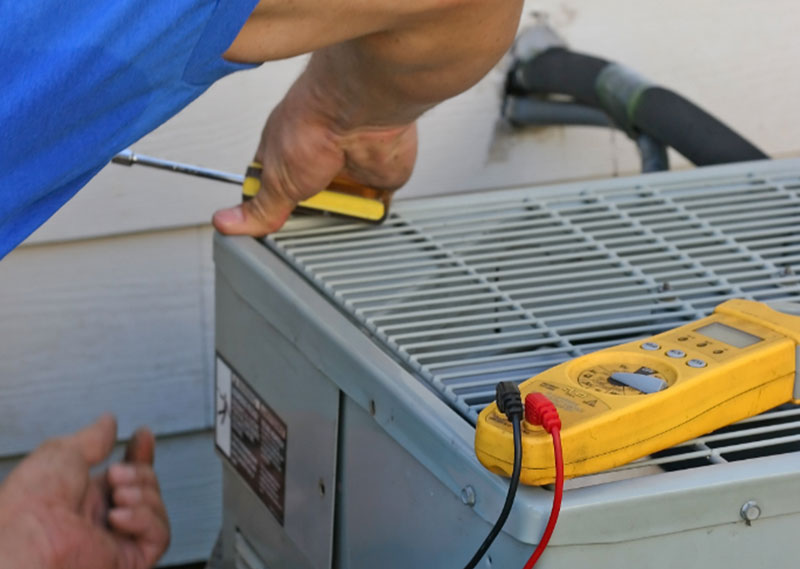
Loose or corroded electrical connections at the outdoor unit are a safety concern and a performance issue. Heat cycling and weather exposure gradually loosen terminals and deteriorate wiring insulation. At minimum once per season, a technician should verify that all connections are tight, corrosion-free, and within manufacturer specifications. Frayed wiring near the condenser is a fire risk and should be addressed immediately. This is not an area where visual inspection alone is sufficient; proper electrical testing equipment is needed to identify hidden problems.
Is Your AC Acting Up? Here Is What to Look For
When your system starts showing warning signs, catching them early limits the damage and the repair cost. The three most common indicators that something needs attention are:
- Warm air from the supply vents: If conditioned air is no longer cooling properly, the cause could range from low refrigerant to a failing compressor.
- Unusual sounds: Clanking, grinding, buzzing, or hissing sounds are not normal operating noise and typically indicate a mechanical or refrigerant issue.
- Higher indoor humidity: If your home feels more humid than usual despite the AC running, the system may not be removing moisture effectively.
Common AC Problems and Solutions
Several issues come up repeatedly in McKinney service calls, and understanding them helps homeowners know what they are dealing with.
Inadequate cooling is one of the most common complaints. It is frequently caused by dirty air filters, blocked return vents, low refrigerant, or a failing capacitor. A professional AC repair diagnosis can identify the root cause quickly rather than guessing at solutions.
Strange noises deserve immediate attention. Clanking or grinding often points to a loose fan blade or failing motor bearing. Hissing or bubbling sounds can indicate a refrigerant leak, which requires a licensed technician to locate, repair, and properly recharge.
Short cycling, where the system turns on and off in rapid intervals, is often a sign of an oversized unit, a refrigerant issue, or a thermostat problem. Oversized equipment is a common issue in newer McKinney construction where systems were improperly sized during installation. Resolving short cycling typically requires a load calculation to determine whether the equipment matches the home’s actual needs.
If your home uses a ductless mini-split system, many of the same principles apply, though the maintenance procedures differ from traditional ducted systems. A technician familiar with both system types can provide the right guidance for your specific setup.
Keeping Your McKinney Home Cool All Season
A well-maintained air conditioning system is the difference between a manageable McKinney summer and a series of costly, stressful breakdowns. From filter changes and coil cleaning to thermostat calibration and drainage inspections, each of these maintenance steps contributes to longer equipment life, lower energy bills, and consistent indoor comfort.
Staying ahead of problems is always less expensive than reacting to them. If your system is overdue for a tune-up, showing warning signs, or simply has not been professionally serviced in the past year, now is the right time to act. Schedule your AC tune-up with our team and get your system ready for whatever the Texas summer has in store.