
Buy a new filter here
Easy Financing Options


Fairview is a smaller city in eastern Collin County defined by larger lot sizes, custom-built homes, and an established residential character that sets it apart from its faster-growing neighbors. Many homes here were built in the late 1990s and 2000s, which means original HVAC equipment is now at or approaching the end of its serviceable lifespan. It also means that multi-zone systems, larger two-stage units, and complex duct configurations are common across this community in ways they are not in standard tract home subdivisions.
Our technicians have the experience to work on these systems. A large custom home with three or four HVAC zones and multiple air handlers requires a different diagnostic approach than a standard 2,000-square-foot house, and we bring that depth of knowledge to every Fairview service call.
Fairview’s housing stock leans toward larger, more complex homes, and the HVAC repairs we perform here reflect that. Beyond the standard residential repairs, we frequently work on multi-zone systems, variable-speed equipment, and larger tonnage units.
If your home has a system configuration that has confused other technicians, we welcome the challenge. Complex setups are part of our regular work in Fairview.
Larger homes can mask HVAC problems for longer because the sheer volume of conditioned space absorbs temperature imbalances without triggering immediate discomfort. By the time a problem is obvious, it has often been developing for a while. These are the signs worth paying attention to before they compound.
In a multi-zone system, zone-specific symptoms often point to damper problems, a failing zone board, or a coil issue isolated to one air handler. Catching these early prevents cascade failures.
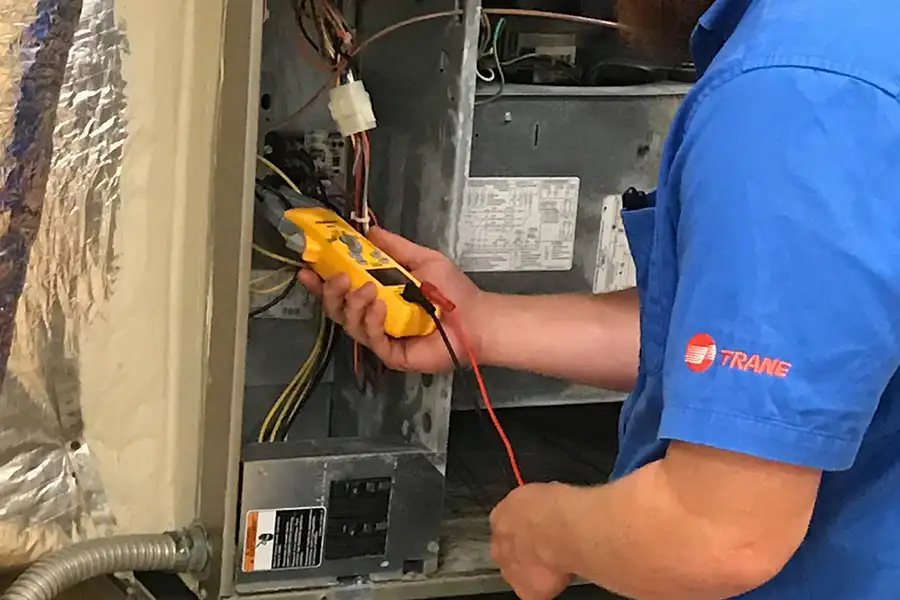
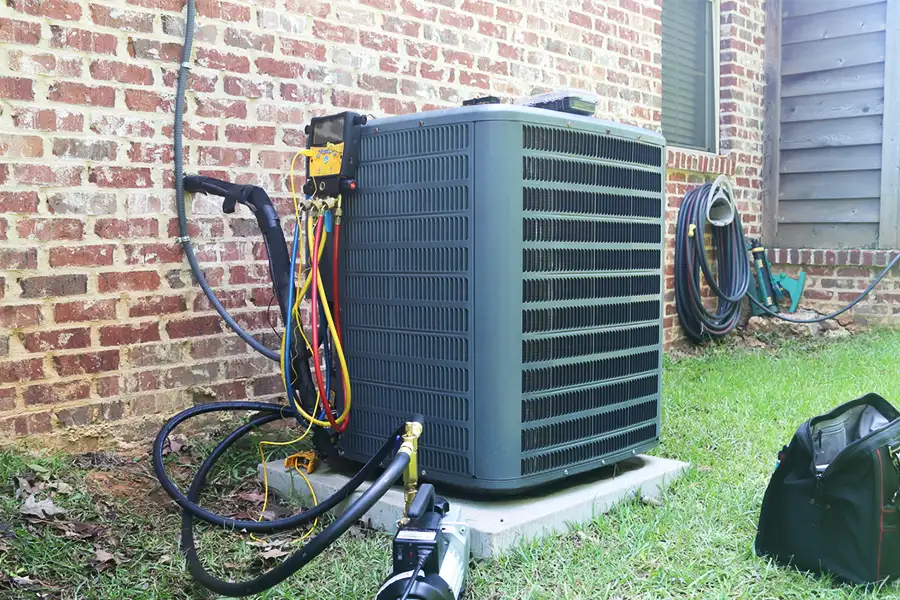
The age profile of Fairview’s housing stock is the primary driver of the repair patterns we see here. Equipment installed in the late 1990s and through the 2000s is now 15 to 25 years old. Heat exchangers, compressors, and variable-speed motors from that era are reaching the end of their designed service lives, and failures in these components tend to be more significant and costly than the capacitor and contactor replacements common in younger systems.
Fairview also borders Lavon Lake and the East Fork Trinity River corridor, and the increased ambient humidity in this part of Collin County affects HVAC systems in specific ways. Evaporator coils run in higher relative humidity must manage more moisture, which means drain pans and condensate lines see heavier use. A slow drain that might be manageable in a drier environment can overflow and cause water damage in a home near Fairview’s eastern edge. We factor these environmental conditions into our service recommendations.

Robert reached out in early September after spending most of the summer dealing with the second floor of his Heritage Ranch home running three to four degrees warmer than the downstairs. He had assumed it was just how the house was built and had been managing it with a window unit in the master bedroom. When he finally called us, he admitted he had been putting it off for over a year.
The diagnosis revealed a failed zone damper on the upstairs supply trunk. The damper had seized in a partially closed position, restricting airflow to the upper floor without shutting it off completely. That partial restriction was just enough to make the upstairs uncomfortable without triggering any obvious alarm. Replacing the damper and recalibrating the zone controller brought both floors to within a degree of each other. Robert mentioned afterward that he wished he had made the call the previous summer.

Working on a large custom home with a multi-zone HVAC system is not the same as replacing a capacitor on a standard residential split system. It requires technicians who understand control boards, zone dampers, variable-speed equipment, and how the components of a complex system interact with each other. That is not something every HVAC company in the area offers.
Fairview homeowners invest significantly in their properties. We treat those homes accordingly and do not cut corners on diagnosis or repair quality.
Yes, and that is actually one of the advantages of a zoned system. A failed damper, a zone board fault, or an airflow issue in one section of the home can often be isolated without disrupting the rest of the system. The downside is that these problems can be subtle and easy to overlook until one area of the home becomes noticeably uncomfortable. If a particular zone is underperforming, a technician can test the damper operation, check the zone controller, and measure airflow at the supply registers to identify exactly where the failure is occurring.
The decision comes down to a few factors: the nature of the repair needed, the overall condition of the system, and what the replacement cost would look like versus continued repair costs. A system that is 20 years old and needs a minor repair like a contactor or capacitor may still have a few years of life left. A system that needs a compressor or heat exchanger replaced at that age is often at or past the point where replacement makes more financial sense. Our technicians will give you an honest side-by-side comparison so you can make the decision with full information.
In a zoned home, a localized musty smell often points to a moisture problem in or near one specific air handler or a section of ductwork that serves that zone. A drain pan that is not draining properly, a coil that has developed biological growth, or a duct section with a moisture intrusion can all produce odors that are limited to the registers served by that part of the system. It is worth having a technician inspect the air handler and duct section serving the affected area, because moisture problems left unaddressed can eventually cause more significant issues.
It can. Homes on the eastern side of Fairview closer to the lake corridor tend to experience higher ambient humidity than properties further inland. A higher humidity load means your evaporator coil is pulling more moisture out of the air during every cooling cycle, which increases condensate production. This puts more demand on the drain pan and condensate line. A line that is partially clogged may handle average conditions fine but overflow during a humid stretch. Annual maintenance that includes drain line flushing is especially important for homes in this part of town.
There are several possible causes. In a single-zone system, the natural rise of heat to upper floors combined with roof radiant load makes upper floors inherently harder to cool. In a zoned system, a damper fault, a duct leak in the upstairs supply runs, or a refrigerant issue affecting one of two air handlers can create floor-to-floor imbalances. Duct leaks in the attic are particularly common in older homes and are often the source of significant cooling loss to the upper floors. A technician can measure airflow at each register, check damper operation, and inspect the duct system to narrow down the cause.