
Buy a new filter here
Easy Financing Options


Frisco built most of its residential neighborhoods between 1995 and 2015, and that means a large portion of the city’s housing stock is now at the exact age when original HVAC equipment starts requiring serious attention. A system installed when a home was built in 2003 or 2007 is now 17 to 21 years old and approaching or past the end of its expected service life. Frisco homeowners are dealing with this reality in large numbers right now.
Our technicians know this city well. From Stonebriar and Starwood to Phillips Creek Ranch and the neighborhoods along Preston Road, we understand the equipment generations that came through during Frisco’s buildout and what those systems typically need at this stage. When you call us, you are getting technicians who can walk into your home and immediately recognize the context.

Frisco generates a high volume of repair calls because the city’s size and the age of its housing wave create consistent demand for component-level fixes on systems that are aging but not yet at end of life. Here is what we handle most often.
For systems at or near end of life, we also provide honest repair-versus-replace assessments so you are not spending money on a repair that only delays an inevitable replacement.
In a city where so many systems are aging through the same window simultaneously, certain symptoms show up across Frisco neighborhoods with predictable regularity. If you are seeing any of these, your system is telling you it needs attention.
Progressive efficiency decline is easy to dismiss year over year, but looking back over a three-year span of utility bills often reveals a trend that was not obvious in any single month.
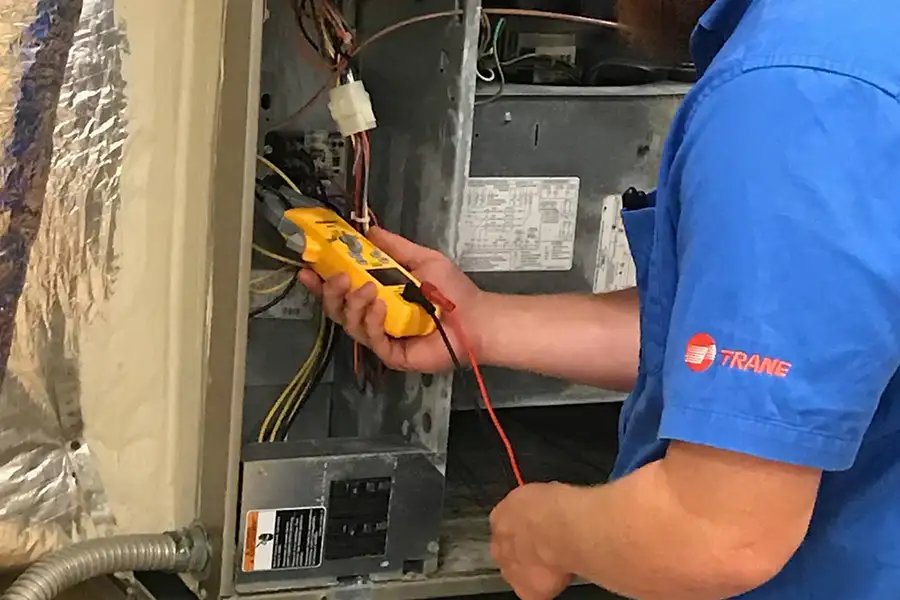
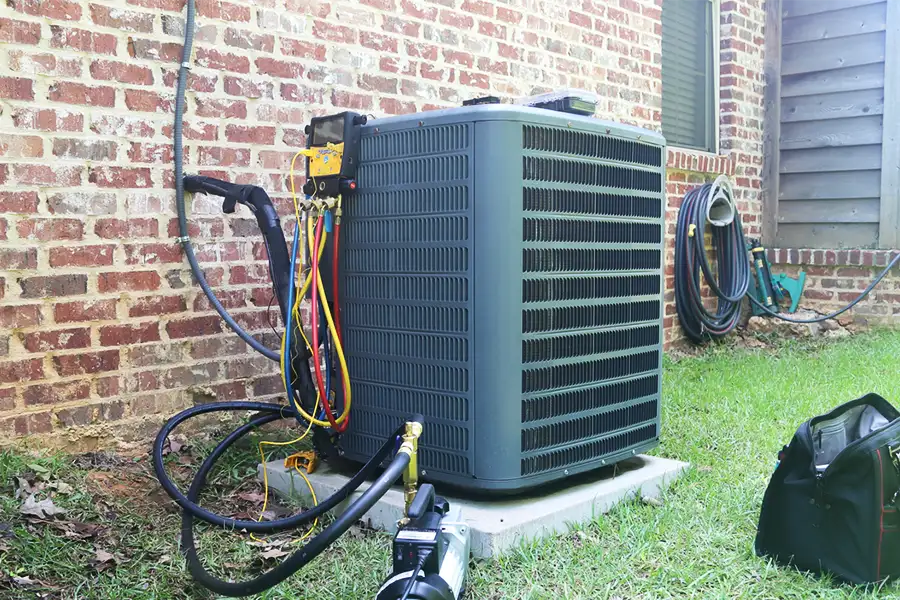
Two-story homes dominate many of Frisco’s established subdivisions, and the thermal dynamics of those homes create a predictable stress pattern on HVAC equipment. The upper floors absorb radiant heat through the roof during the day, creating a temperature differential that forces systems to work harder in the afternoon and evening hours. Over years of peak summer operation, that extended daily run time accelerates wear on compressors, capacitors, and blower motors.
Frisco’s urban development density also plays a role. As the city has filled in, the urban heat island effect has increased ground-level and ambient temperatures compared to the more open landscape that existed when many of these homes were built. The outdoor temperature reference that a system was originally sized against has effectively shifted warmer, which means equipment operating near the edge of its capacity is now more frequently pushed past that edge on peak days.
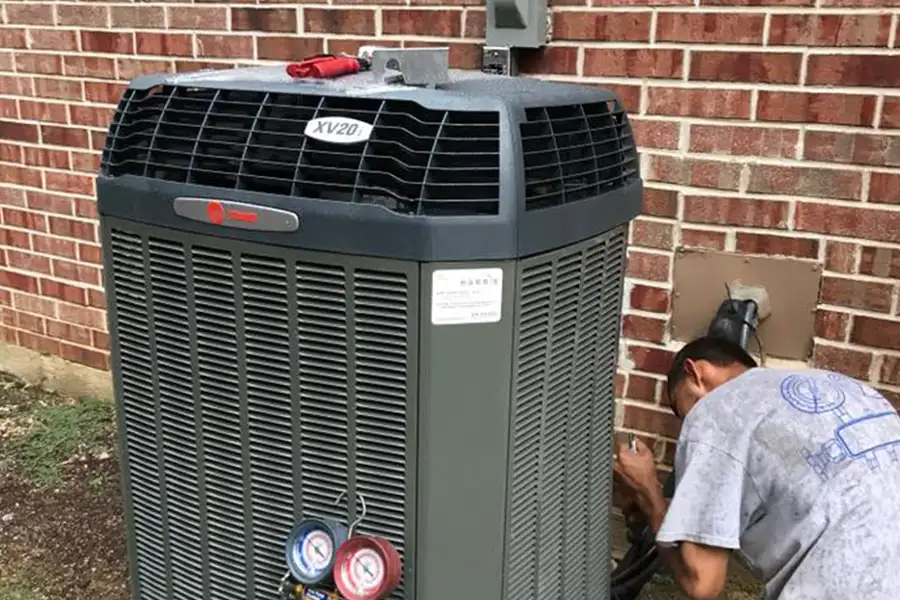
Teresa called on a Friday afternoon in August. Her home in the Stonebriar area had been cooling fine in the morning but stopped keeping up with the heat by midday. The thermostat was set to 73 but the house was sitting at 80 by 3 p.m. She had already checked the filter and it was clean.
The technician found the system low on refrigerant and confirmed a slow leak at the evaporator coil. The coil was original to the home, which had been built in 2001, making it over 20 years old. The leak was at a fitting that had vibrated loose over time. After sealing the connection and recharging the system, the technician checked the rest of the coil’s condition. It was borderline but functional. Teresa was given an honest assessment: the repair should hold for another season or two, but at the coil’s age and condition she should budget for a replacement in the near term. She appreciated being given the full picture rather than just the immediate fix.
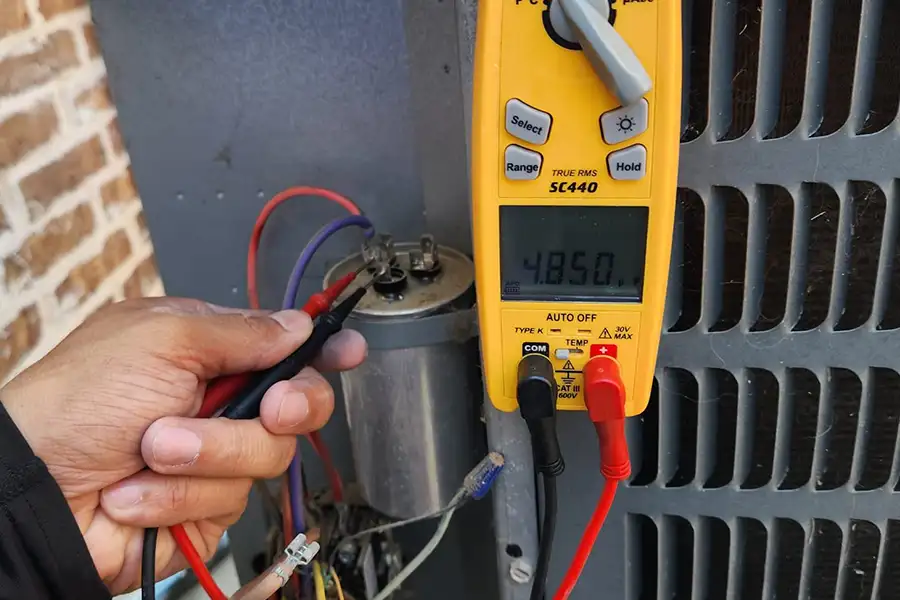
In a city as large and competitive as Frisco, HVAC companies are not in short supply. What we offer is not a lower price or a faster promise than everyone else. It is a consistent track record of showing up prepared, diagnosing accurately, and being straight with customers about what their system actually needs.
We have been in a lot of Frisco attics and mechanical rooms. That experience translates directly into faster diagnoses and fewer unnecessary parts replacements.
Systems from that era are typically in their late teens to early twenties now, which is the range where major component failures become more likely. Compressors, evaporator coils, and heat exchangers are the most significant concerns at this stage. In the years leading up to those bigger failures, capacitors and contactors fail more frequently because their rated lifespan has been exceeded, and refrigerant leaks become more common as fittings and coil metal fatigue from years of thermal cycling. Annual maintenance can catch developing problems before they become emergency failures.
A hard-start kit is an electrical component that provides additional starting torque to a compressor that is having difficulty starting under load. When a compressor ages, it sometimes struggles to start, drawing high current in the process and putting stress on the electrical components. The hard labored start you sometimes hear as a grinding or clicking sound at startup can be a sign of this. A hard-start kit can extend the working life of an aging compressor and reduce the stress on the capacitor and wiring. It is not a permanent solution if the compressor is failing, but it can buy meaningful additional time on a system that is otherwise functioning well.
As a city develops and fills in with pavement, rooftops, and buildings, the ground-level temperatures rise above what they were in a less developed landscape. Frisco has experienced significant infill over the past two decades. This means the ambient outdoor temperature that your condenser unit is rejecting heat into is effectively higher than it was when your home was built. A system sized for the conditions of 2004 Frisco is operating in a warmer environment today, which can push it closer to its capacity limits on peak summer days than it was originally designed to handle.
Yes, over time. When refrigerant is low, the compressor runs hotter than it should because it is moving less refrigerant mass per cycle and the cooling effect on the compressor itself is reduced. Sustained operation in that condition accelerates compressor wear. Additionally, at very low charge levels, the refrigerant oil that lubricates the compressor is not circulating properly, which increases metal-to-metal contact and wear. A slow leak that goes unaddressed for a season or two can contribute to a compressor failure that would not have occurred if the leak had been fixed promptly.
For homes built in the late 1990s through mid-2000s, duct inspection is often worth the time. Flex duct runs in attic spaces are subject to years of thermal cycling between extreme heat and cooler temperatures, and the connection points at the air handler, the plenum, and the register boots can loosen or separate over time. Studies of similar-era homes frequently show duct leakage rates of 20 to 30 percent of total airflow, meaning a significant fraction of conditioned air never reaches the living space. Sealing those leaks is one of the most cost-effective ways to improve comfort and lower utility bills in an older home.