
Buy a new filter here
Easy Financing Options


Lucas is one of the few communities in Collin County that has maintained its low-density character through the region’s growth boom. One-acre minimum lot sizes and a predominantly rural-suburban feel mean homes here are larger, more spread out, and often equipped with HVAC systems configured for greater square footage than standard subdivisions. That configuration, larger conditioned spaces, longer duct runs, and in some cases multiple systems per property, creates a set of HVAC demands that require experienced hands.
Our technicians work in Lucas regularly and understand what these properties require. From homes on treed lots along the East Fork Trinity corridor to newer custom builds near Parker Road, we bring the right diagnostic approach to every call.
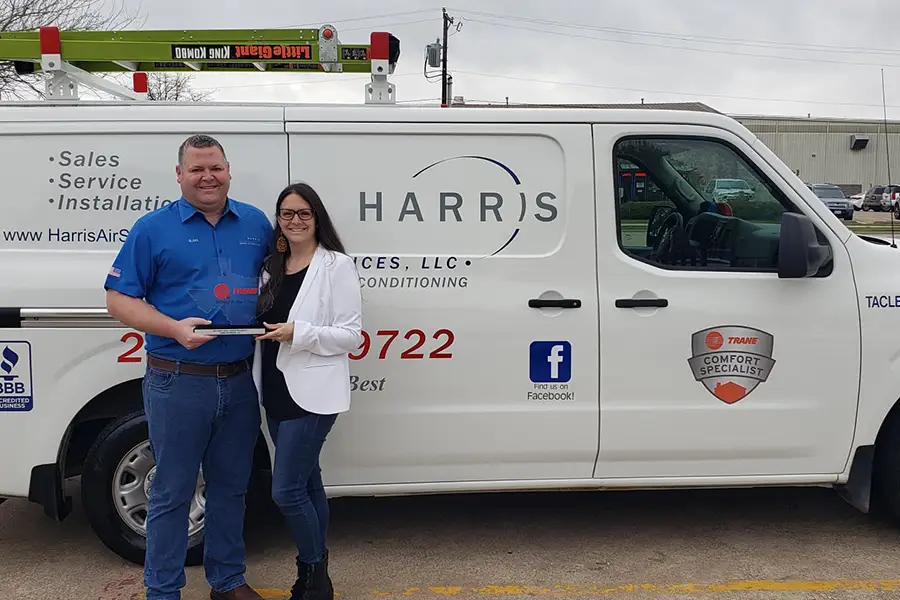
Larger homes with longer duct runs, multiple HVAC systems, and higher overall square footage require more thorough diagnostics than a standard single-system repair call. Here is what we handle across Lucas properties.
We arrive prepared for larger-scale residential work and do not treat a Lucas property like a standard subdivision service call.
On a larger property, HVAC problems can develop more gradually because the sheer square footage buffers temperature changes. By the time a problem is uncomfortable enough to prompt a call, it has often been building for weeks. These are the signals worth catching early.
On a multi-system property, a problem isolated to one unit may not be obvious until someone pays attention to which part of the house is comfortable and which is not.
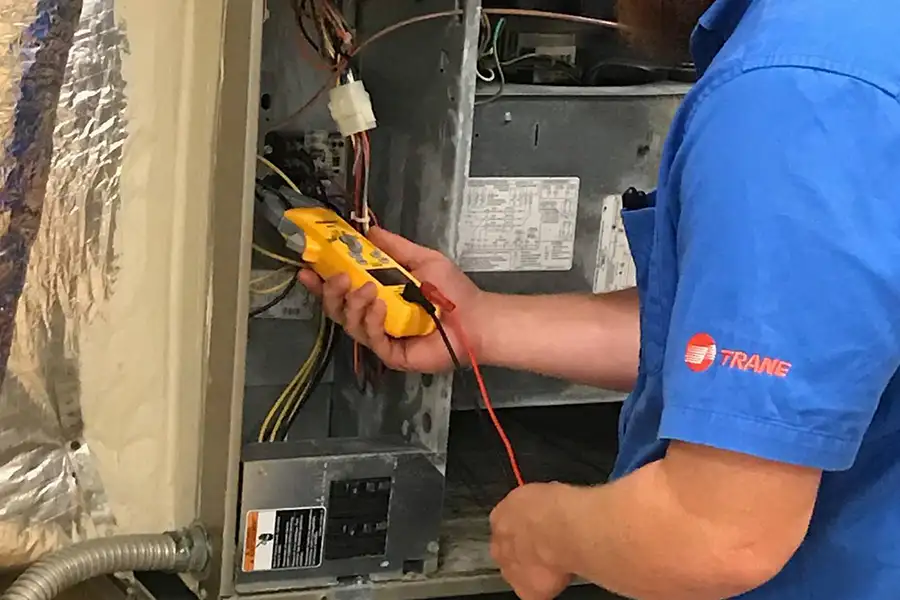
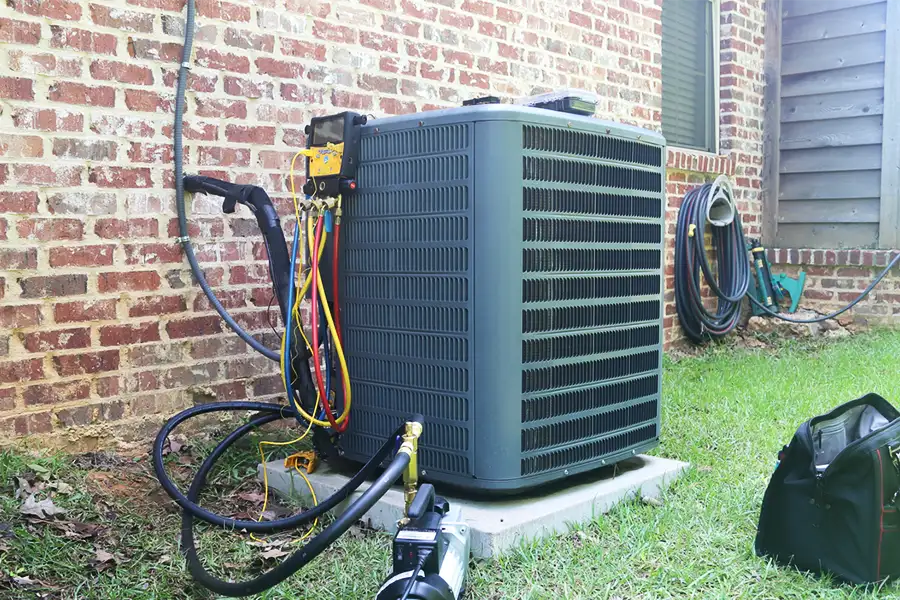
Lucas sits in the East Fork Trinity watershed, and the combination of mature tree cover, creek proximity, and higher ground moisture content in parts of the city creates a micro-environment that affects HVAC systems differently than the open suburban developments nearby. Homes with significant tree coverage can see higher pollen and organic debris accumulation on outdoor condenser coils. Properties near creek corridors experience higher ambient humidity, which means indoor coils and drain systems work harder and moisture management requires more attention.
The size of homes in Lucas also means duct systems cover more ground. A longer duct run loses more temperature between the air handler and the far register, and a small leak in a long duct run loses proportionally more conditioned air than the same leak in a compact suburban system. Lucas homes that have not had duct systems inspected in the past five to seven years are often operating with meaningful efficiency losses that go unnoticed because the discomfort is gradual and spread across a large space.
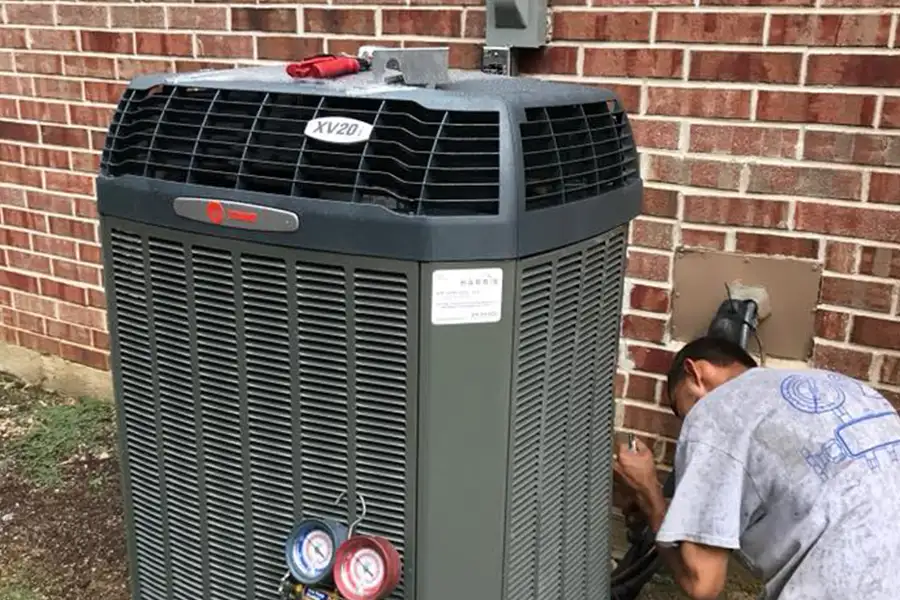
Gary reached out in mid-October when the master suite wing of his home near Stinson Road had stopped warming properly. The rest of the house was comfortable, but the back bedrooms felt cold even with the heat running. His property had two separate HVAC systems, and he initially assumed the rear system might have a refrigerant issue.
When our technician arrived and ran diagnostics on the rear system, the refrigerant charge and mechanical condition were both fine. The problem was in the ductwork. A long flex duct run serving the master wing had partially collapsed at a bend near a ceiling joist, reducing airflow to those rooms by roughly 60 percent. The duct had been installed with a turn radius that was too tight, and after several years the interior liner had buckled inward. The technician rerouted and replaced the affected section, restored full airflow to the registers, and verified the system was delivering the right temperature at the far end of the run. The fix took about two hours and cost significantly less than Gary had been bracing for.
Lucas is a community where homeowners have invested significantly in their properties and expect contractors to approach their homes accordingly. We do not send a technician who treats a 4,500-square-foot custom home the same way they would a standard neighborhood repair call. Larger homes require more thorough diagnostics, more time, and more experience with complex configurations.
We take Lucas service calls seriously because the properties here deserve that level of attention. Call us and you will see the difference preparation and experience make.
It is convenient and often more cost-effective to have both serviced during the same visit, and it gives the technician a complete picture of your home’s overall HVAC health. That said, if one system has an active problem and the other is performing normally, we can focus the repair visit on the issue at hand and schedule maintenance on the second system separately. What we do recommend is making sure both systems are on a regular maintenance schedule, because deferred maintenance on one unit while the other is well-maintained can lead to an expensive surprise when the neglected system reaches a failure point.
Longer duct runs naturally lose some static pressure as air travels further from the source. In a well-designed and properly sealed system, this is accounted for in the duct sizing and layout. But in older or poorly installed systems, undersized ducts, sharp bends that restrict flow, disconnected joints, or accumulated duct collapse at flexible sections can reduce airflow significantly at the registers furthest from the air handler. A technician can measure static pressure and airflow at multiple points in the system to identify where the loss is occurring and what the correct fix looks like.
It can work both ways. Trees that shade the outdoor condenser can slightly reduce the ambient temperature the unit is rejecting heat into, which is modestly beneficial. However, heavy tree coverage also means more organic debris, pollen, cottonwood, and leaves accumulating on and around the condenser coil. A clogged coil loses its ability to release heat efficiently and forces the compressor to work harder. In heavily treed areas like parts of Lucas, annual coil cleaning is important and may be needed more than once per year depending on how much debris the specific location generates.
Higher ambient humidity means the evaporator coil removes more moisture from the air with every cooling cycle, producing more condensate. This puts greater demand on the drain pan and condensate line. A partially clogged drain line that might not overflow under normal conditions can back up quickly during a humid stretch. It also means the coil surfaces and drain pan are wetter for longer periods, which creates more favorable conditions for biological growth. Annual maintenance should include a drain line flush and pan inspection, especially for Lucas homes near the Trinity corridor.
The age and condition of the system combined with the nature of the repair needed are the two main inputs. A system under 12 years old with a straightforward repair is usually worth fixing. A system 15 years or older facing a major component failure like a compressor, coil, or heat exchanger warrants a serious conversation about replacement, because additional failures in other aging components often follow. For a larger home with multiple systems, it can also make sense to replace one system at a time as they age out rather than facing two simultaneous failures. Our technicians will give you the information you need to make that call without pushing you in either direction.