
Buy a new filter here
Easy Financing Options


Melissa has been one of Collin County’s fastest-growing cities for the better part of a decade, and the result is a housing stock that skews newer than most of its neighbors. The majority of homes here were built in the 2010s and early 2020s, which means many residents are encountering their first major HVAC repair cycle. A system that has never had a serious problem can develop one quickly when the conditions are right, and Melissa’s position on the northern edge of the county, exposed to open weather patterns and seasonal extremes, creates those conditions regularly.
Our technicians serve Melissa and understand what first-cycle repairs look like on this generation of equipment. We give homeowners the information they need to make smart decisions about their systems without creating unnecessary alarm.

Even newer systems in Melissa develop problems, and the repairs we see most often here reflect both the equipment generation and the local conditions that put it under stress.
We carry parts for the equipment generations most common in Melissa’s newer communities so most repairs are handled in a single trip.
Homeowners in newer Melissa subdivisions sometimes assume that because their home is relatively young, any HVAC issue must be minor. That assumption can lead to delays that make problems worse. These symptoms deserve a call regardless of how new the system is.
High indoor humidity with the system running often signals a refrigerant issue or a coil problem that is reducing the system’s ability to remove moisture from the air, not just cool it.
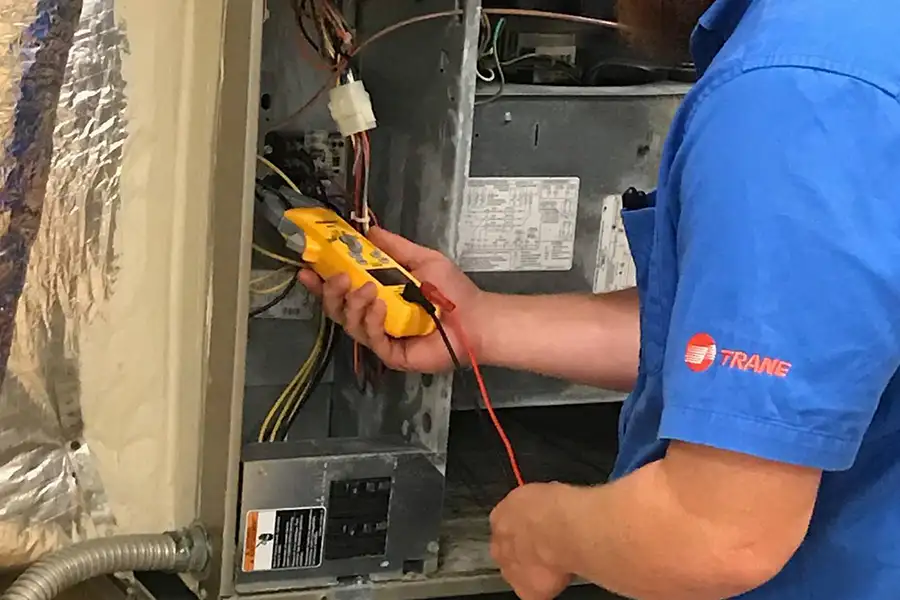
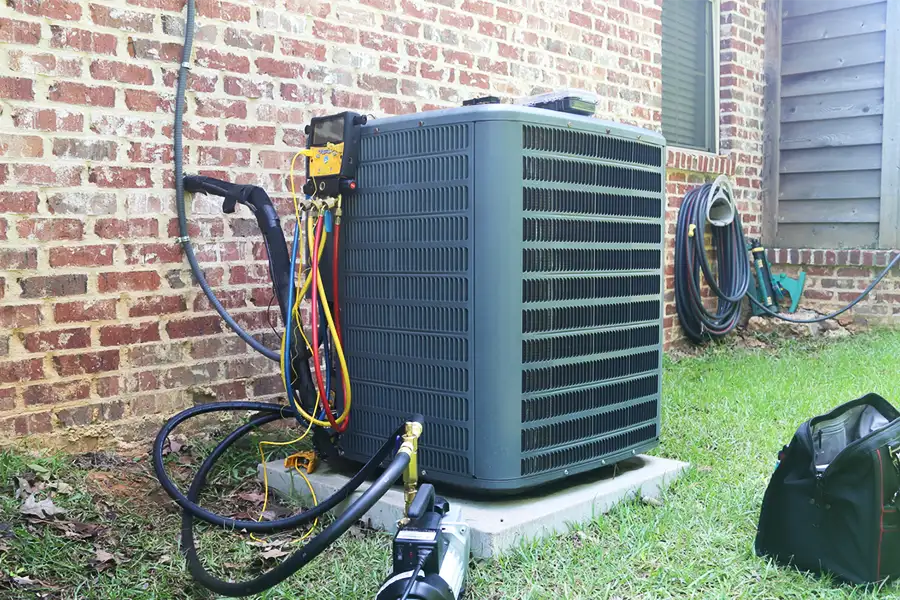
Melissa’s growth happened fast, and speed in residential construction does not always favor HVAC quality. Duct connections that were not properly sealed at installation, systems that were charged with refrigerant in a hurry, or equipment that was sized using a quick calculation rather than a proper load analysis can all perform adequately for a few years before the issues surface. The first hot summer after the builder warranty expires is often when Melissa homeowners discover what was quietly wrong from the start.
Melissa’s geography adds to the pressure. The city sits on largely unshielded terrain north of the older Collin County development corridor, which means wind-driven debris and temperature extremes hit harder here than in more sheltered parts of the metro. Outdoor condenser units in Melissa see more particulate accumulation than homeowners expect, and the region’s clay soil shifts enough with seasonal moisture changes to stress slab foundations and the duct systems that run above them.
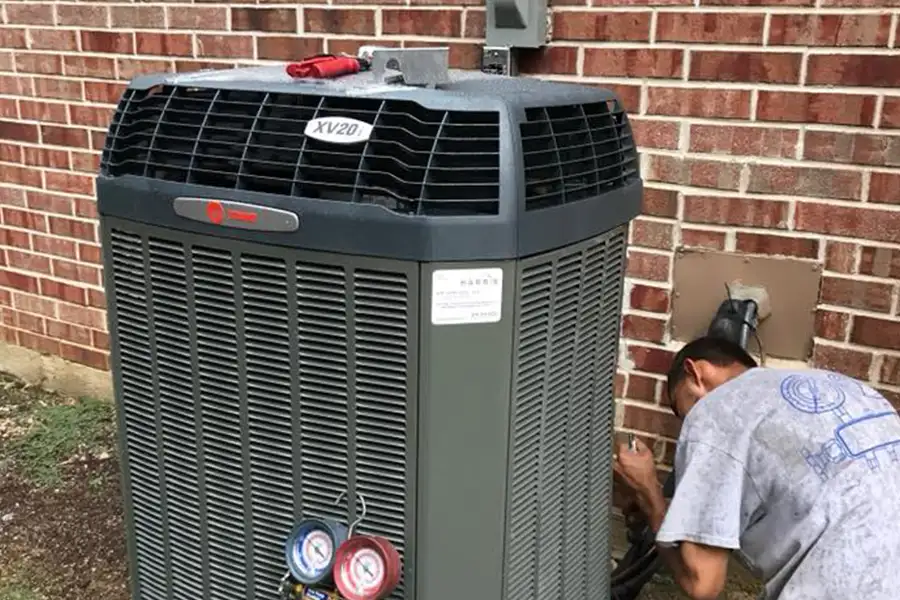
Nathan moved into his home in Liberty Hills about two years before he called us. He had been noticing that the house felt stuffy and humid all summer even though the thermostat was reaching its set point. He had attributed it to the house being large and assumed it was normal for Texas.
The technician found the system was running low on refrigerant due to a slow leak at a flare fitting on the line set. When refrigerant is low, the evaporator coil runs warmer than it should, which reduces its ability to condense moisture out of the air. The temperature set point was being reached, but the system was not dehumidifying properly. After locating and sealing the leak, recharging the system, and verifying coil temperatures were back in the correct range, Nathan noticed the difference within a day. He mentioned afterward that he had not realized how uncomfortable the house had been until it finally felt right.
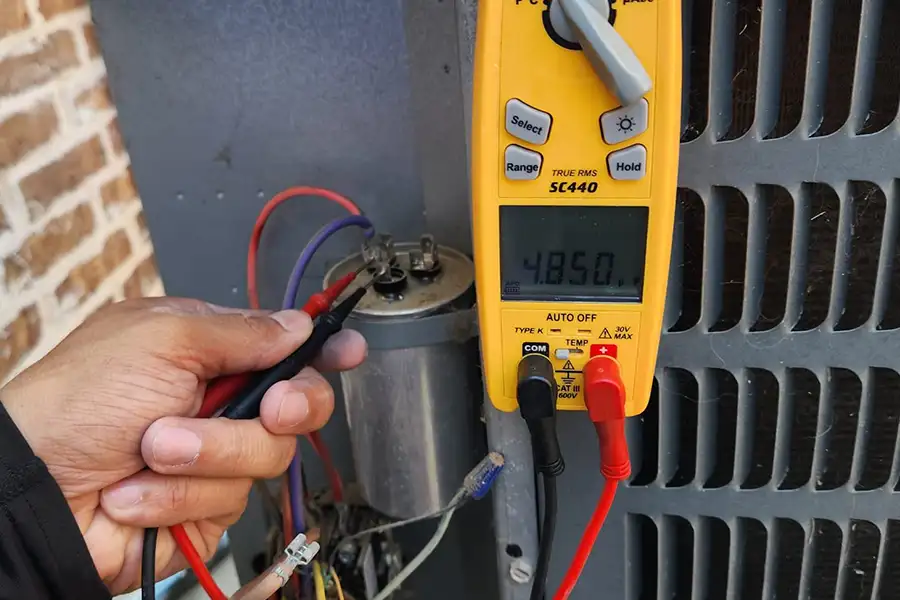
In a newer community like Melissa, many homeowners are dealing with their first HVAC repair and are not sure what to expect from the process. We make it straightforward. We show up on time, explain what we find, and tell you what it costs before we start. There are no pressure tactics and no upselling on equipment you do not need.
First-time repair situations should not be stressful. We make sure Melissa homeowners leave the interaction informed and confident in the work that was done.
Newer homes in fast-growing markets can have HVAC systems that were installed under tight construction schedules. Refrigerant charge levels that were set slightly off at commissioning, duct connections that were not fully sealed, or equipment that was chosen for cost rather than proper sizing can all perform acceptably for a few years before the underlying issue becomes noticeable. Some component failures like capacitors also simply happen within the first five to ten years regardless of installation quality, because they are wear parts with a rated lifespan. A repair on a newer system is not necessarily a sign of a bigger problem, but it is worth having a technician verify that the installation itself is correct while they are there.
Humidity removal is a function of how cold the evaporator coil runs, not just whether the system is cooling the air to the set temperature. If the system is low on refrigerant, the coil temperature rises and moisture condenses off the air less efficiently. An oversized system that short-cycles can also fail to remove enough humidity because it does not run long enough per cycle to wring the moisture out of the air. Both situations result in a house that feels sticky even when the thermostat reads the right number. A technician can measure coil temperatures and refrigerant charge to identify which issue is occurring.
A unit that hums without the compressor starting usually points to a failed capacitor or a compressor that is struggling to start on its own. The capacitor provides the electrical boost needed to get the compressor and fan motor running, and when it fails, the motors receive power but cannot start. Do not leave the system in this state for an extended period because the humming means current is flowing through components that are not moving, which generates heat and can cause additional damage. Shut the system off at the thermostat and call for service. Capacitor replacement is one of the most common and straightforward HVAC repairs.
A few indicators are accessible without any tools. Compare the airflow coming from registers in rooms closest to the air handler versus rooms at the far end of the house. A significant imbalance where far rooms get noticeably less air can point to undersized duct runs or leaky connections. Rooms that are consistently harder to cool or heat than others despite being similar in size are another signal. A technician can perform a more thorough evaluation by measuring static pressure in the system and airflow at individual registers to identify whether the duct layout is delivering air the way it should.
Yes, more than most homeowners realize. The air filter protects the blower wheel and evaporator coil from dust accumulation. A clogged filter reduces airflow through the system, which forces the blower motor to work harder and can cause the evaporator coil to run too cold and freeze over. A frozen coil blocks airflow entirely and can cause the compressor to overheat. The filter replacement interval depends on the filter type and how dusty your home is, but for most Melissa homes with standard one-inch filters, checking monthly and replacing every one to two months during heavy use periods is appropriate.