
Buy a new filter here
Easy Financing Options


Murphy is a compact, fully developed city tucked between Wylie and Plano in southern Collin County. Most of its residential neighborhoods were built in the late 1990s through the mid-2000s, which places the bulk of Murphy’s housing stock firmly in the age range where HVAC systems are entering their most failure-prone years. Original equipment that has been running through North Texas summers for 18 to 25 years is statistically likely to require significant repairs or replacement, and Murphy homeowners are navigating that reality in large numbers right now.
Our technicians work in Murphy regularly and recognize the equipment generations and neighborhood configurations that define this community. When you call us, you are not starting from zero with a dispatcher who has to look up where Murphy is.

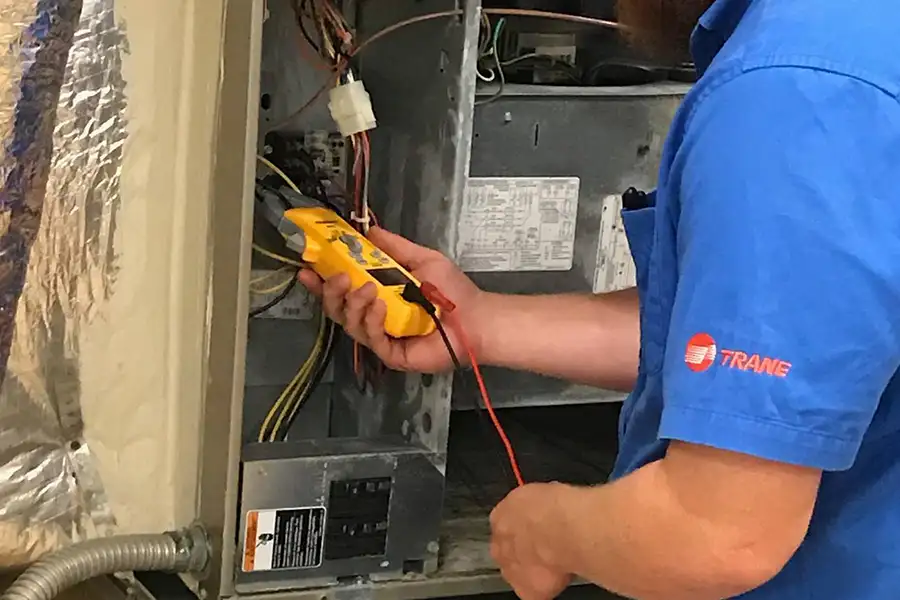
Murphy’s consistent housing age profile means the repairs we see here follow a predictable pattern. These are the most common service calls we receive in this community.
For Murphy systems at the point where repair costs are approaching replacement value, we provide an honest comparison so the homeowner can make an informed decision rather than a reactive one.
A home built in 2001 with its original HVAC system has been through more than two decades of Texas summers and winters. The signs of aging show up in ways that are easy to rationalize away until the system fails completely. Do not wait for that moment.
A system that trips its circuit breaker during startup is drawing more current than the circuit can handle. That pattern typically points to a failing compressor or a seized motor, and continuing to reset the breaker without diagnosing the cause can damage connected components.
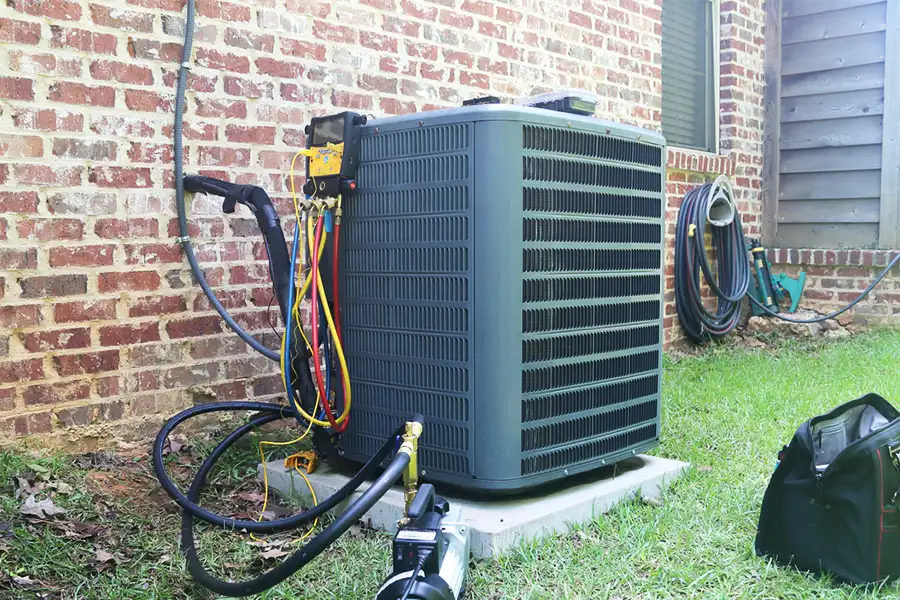
Murphy’s proximity to Lake Lavon and the eastern Collin County creek systems means the southeastern portions of the city experience meaningfully higher ambient humidity than the more inland parts of the DFW metro. For HVAC systems, that extra humidity translates into heavier condensate loads on evaporator coils and drain systems. A drain pan or condensate line that handles average conditions adequately can overflow during a sustained humid stretch, and Murphy homes in the eastern part of the city see those conditions more often than homeowners typically account for.
Murphy’s neighborhood density also factors in. Unlike lower-density communities to the north, Murphy’s homes sit on smaller lots with less separation. Outdoor condenser units placed near fences, AC pads against brick walls, or in corners between structures can develop restricted airflow around the unit, reducing the condenser’s ability to dissipate heat and causing the system to work harder to achieve the same cooling output. Over years of operation in that configuration, the compressor sees a shortened service life.
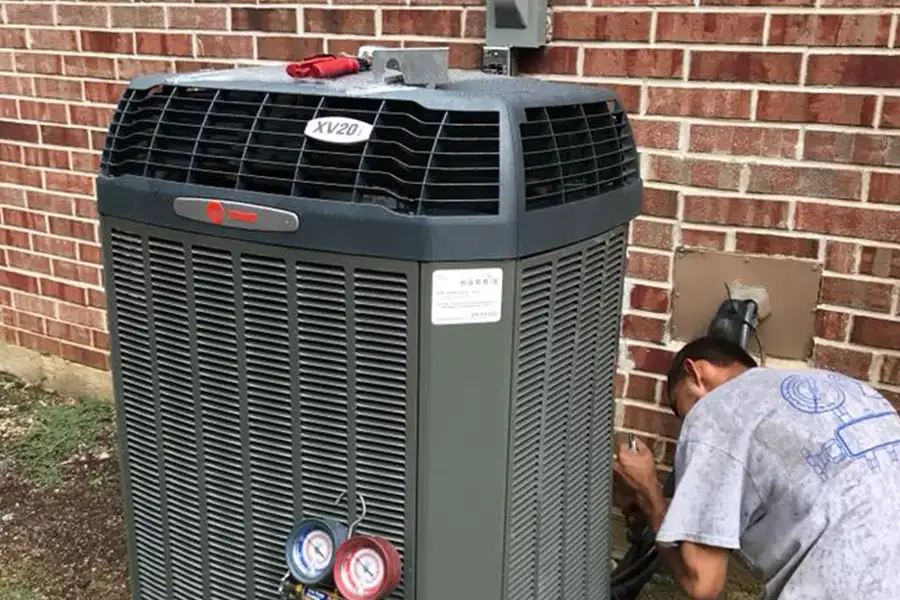
Sandra had been noticing her electricity bills climbing every summer for the past three years but assumed it was just the cost of energy going up. When her bill jumped an additional forty dollars in a single month compared to the same month the previous year with no change in usage habits, she finally called us.
The technician found two overlapping issues. The condenser coil on her 19-year-old unit was heavily fouled with dust and debris, reducing heat rejection efficiency significantly. At the same time, the refrigerant charge was about 15 percent low from a slow leak that had been going on long enough to make a real difference in system performance. Neither issue would have been obvious without a diagnostic visit. The coil was cleaned, the leak was found and sealed at a fitting near the air handler, and the system was recharged. Sandra’s next bill reflected the difference. The technician also gave her an honest assessment of the overall system condition and a realistic timeline for when replacement would make more financial sense than continued repairs.

Murphy homeowners dealing with aging systems need a technician who can give them a clear-eyed view of their situation, not a salesperson in a uniform. We have been in enough Murphy homes to understand what a system at this age typically needs and to give homeowners honest guidance rather than a push toward an unnecessary replacement or a repair that only delays the inevitable.
A straight answer about your HVAC situation is something every Murphy homeowner deserves. That is what we show up to provide.
No. A circuit breaker trips when the current drawn exceeds what the circuit is rated for. Repeatedly resetting a breaker without diagnosing why it is tripping can overheat the breaker itself, damage wiring, and contribute to additional component failure in the HVAC system. In older systems, this pattern usually points to a compressor that is struggling to start and drawing excessive current, a seized fan motor, or a short somewhere in the electrical system. Turn the system off at the disconnect and the thermostat and call for service. Do not continue cycling the breaker.
The condenser coil is the component that releases heat from your home to the outdoors. When it is coated in dust, pollen, or debris, it cannot transfer heat efficiently, so the compressor has to run longer and work harder to achieve the same cooling result. A heavily fouled coil can increase energy consumption by 10 to 20 percent or more depending on how blocked it is. Over a full Texas cooling season, that adds up to a meaningful difference on your utility bills. Coil cleaning is one of the highest-return maintenance tasks for an aging system in Murphy’s environment.
The clearest field indicator of an undersized system is a unit that runs continuously during peak heat without reaching the set temperature. An oversized system shows the opposite pattern: it reaches the set temperature quickly but short-cycles, failing to run long enough to adequately dehumidify the space. Both conditions cause comfort problems and accelerate component wear. If your system was installed with the original construction of the home and no load calculation was performed at the time, there is a reasonable chance the sizing was based on a rule of thumb rather than the actual heat load of your specific home. A technician can assess whether the equipment capacity matches the load.
Several things make a measurable difference. Keeping the condenser coil clean, replacing the air filter on a consistent schedule, making sure the area around the outdoor unit has adequate clearance for airflow, and scheduling professional maintenance twice per year are the highest-impact steps available to a homeowner. For an aging compressor specifically, a hard-start kit can reduce the current draw and mechanical stress at startup and extend the compressor’s remaining service life. None of these steps prevent eventual replacement, but they can meaningfully delay it and reduce the likelihood of a sudden failure during the hottest stretch of summer.
On an older system, deferred maintenance compounds rather than just accumulates. A partially clogged coil reduces efficiency and causes the compressor to run hotter. A compressor running hot accelerates wear on the motor windings and refrigerant oil. A small refrigerant leak that goes unaddressed causes the compressor to work in conditions it was not designed for. Each deferred issue makes the next failure more likely and more expensive. On a newer system, a missed maintenance cycle is usually inconsequential. On a system that is 18 to 25 years old, it can be the difference between a repair and a full replacement that happens in August rather than on a planned timeline.