
Buy a new filter here
Easy Financing Options


Parker is one of the few incorporated cities in Collin County that has deliberately maintained a low-density character through zoning that requires larger lot sizes. The result is a community of custom and semi-custom homes on acreage parcels, many of them built between the late 1980s and early 2000s, sitting on heavily treed properties with significant separation between neighbors. These are not standard subdivision homes, and the HVAC systems inside them reflect that difference in size, configuration, and age.
Our technicians approach Parker service calls knowing that they are likely walking into a larger home, a more complex HVAC setup, or a system old enough that some components are no longer in current production. We come prepared for that reality and do not treat a Parker property like a standard neighborhood repair call.
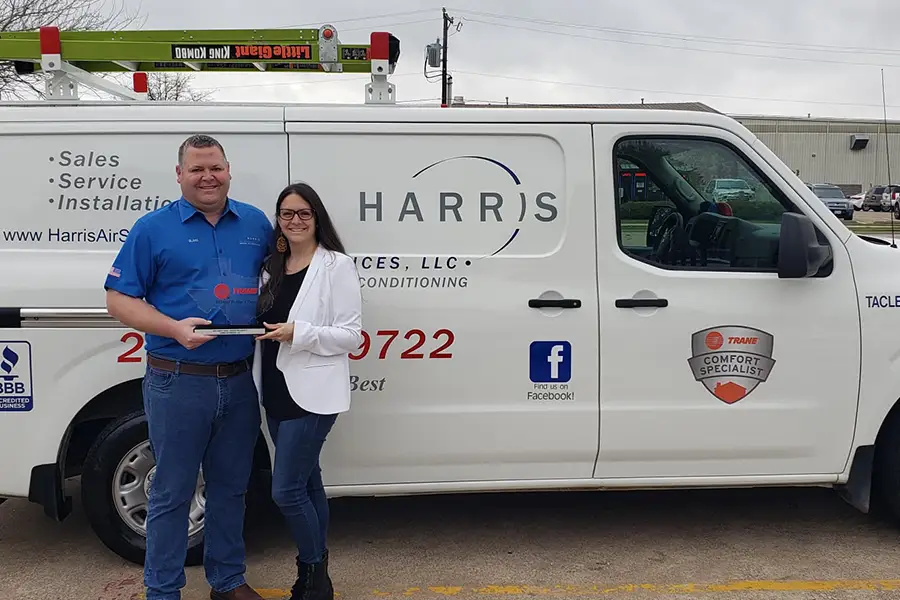
Parker’s custom home character means repair calls here often involve older equipment, non-standard configurations, or systems that have been modified or added to over the years. We handle all of it.
If another company has told you a repair cannot be done on your older system, call us before you accept that answer. We have access to parts and experience with equipment generations that many residential-only companies do not carry.
On a larger Parker property, HVAC problems can go unnoticed longer because the home has enough volume to absorb temperature imbalances before they become obvious. By the time a guest wing or secondary bedroom is clearly uncomfortable, the underlying issue has usually been developing for a while. These signals are worth catching earlier.
A chemical smell near HVAC equipment, even a faint one, should be investigated the same day. It can indicate a refrigerant leak near heat sources or a furnace combustion issue that poses a safety risk.
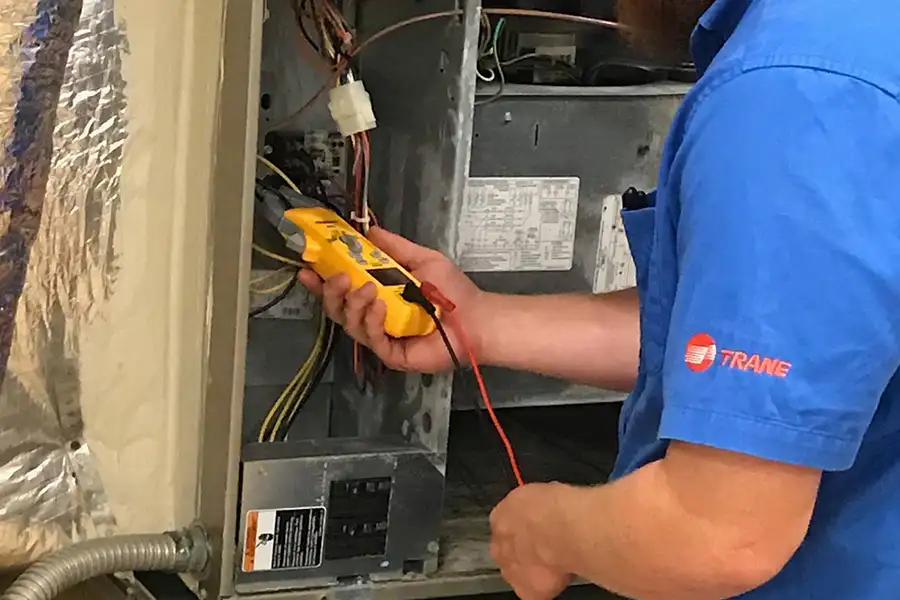
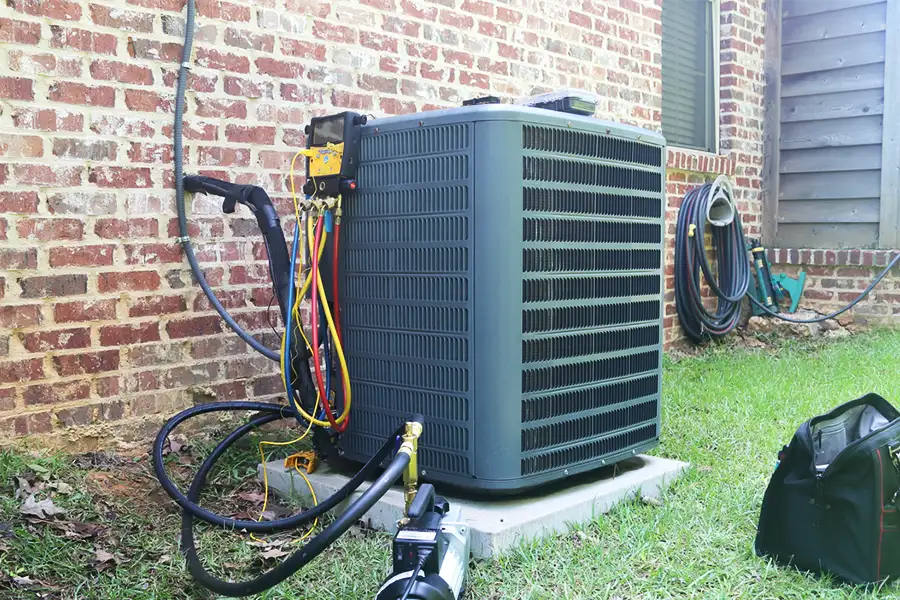
Parker’s housing stock is predominantly from the late 1980s through early 2000s, which puts a significant share of its HVAC systems well past the 20-year mark. Equipment from that era used refrigerants that are no longer in production for new equipment, and servicing these systems requires technicians who either carry compatible refrigerants or can advise on retrofit options. Coils and compressors from that generation are increasingly difficult to source, which changes the repair-versus-replace calculus for Parker homeowners compared to someone with a 10-year-old system.
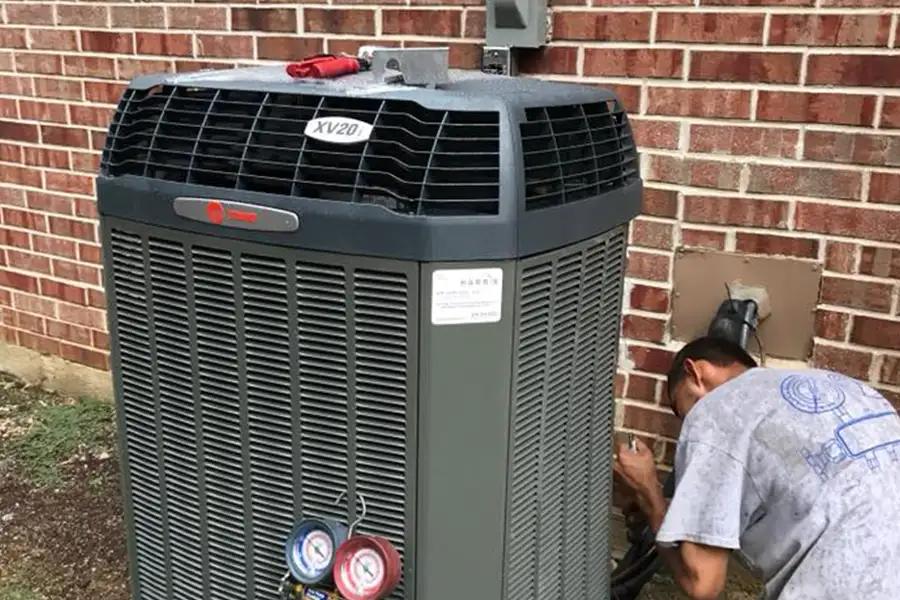
The heavily treed nature of Parker’s properties also creates a specific outdoor unit challenge. Mature trees drop leaves, seed pods, and organic debris directly onto condenser units in ways that exposed suburban properties do not experience. Coils on units under tree canopy can accumulate enough organic matter in a single season to meaningfully reduce airflow and heat rejection efficiency. Annual cleaning at a minimum, and ideally twice per year on properties with heavy canopy cover, keeps this from becoming a compressor longevity issue.
James had owned his property near McMillen Road for about twelve years when he called us. The home had two HVAC systems, and one of them had been declining in performance for most of the previous summer. He had assumed it was just the age of the unit and had been supplementing with ceiling fans and keeping that wing of the house at a higher temperature than the rest.
The technician found the system’s evaporator coil nearly completely blocked with a combination of dust and pet hair that had bypassed an undersized filter over several years. The blockage had been slowly reducing airflow to the point where the coil was freezing intermittently, causing unpredictable cooling output. The coil required a full cleaning, and the filter situation was corrected with a properly sized replacement. Once airflow was restored, the system cooled the wing effectively for the first time in over a year. James mentioned he had no idea how much performance he had been losing and that he wished he had called sooner rather than just adapting to the discomfort.
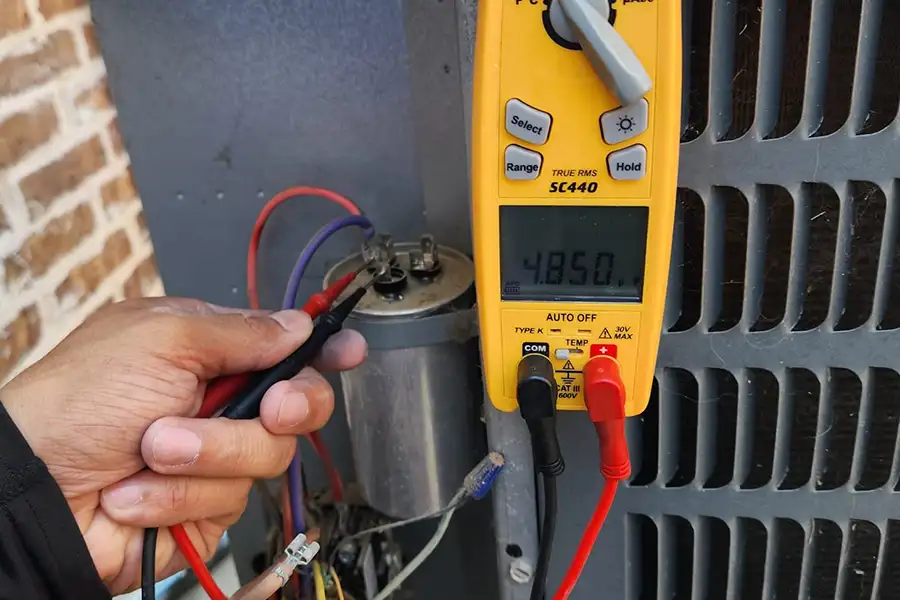
Parker homeowners are not looking for the cheapest option. They are looking for a technician who can handle what they have, communicate clearly, and not waste their time. That is what we deliver on every call to this community.
We respect Parker properties and the investment homeowners have made in them. Every service call here gets the same thorough approach we would bring to any complex residential job.
In many cases, yes. Older systems using R-22 refrigerant can still be serviced because reclaimed and recovered R-22 is available through certified channels, though it is more expensive than current refrigerants. Whether repair makes sense depends on how much refrigerant is needed, what the underlying leak repair costs, and the overall condition of the system. For systems that require a significant charge refill in addition to a leak repair, the refrigerant cost alone can make replacement of the entire system a more financially rational choice. Our technicians will give you the numbers for both options so you can decide with full information.
Mature trees drop leaves, seed pods, pollen, and organic debris directly onto condenser coils in ways that open suburban yards do not. The fins on a condenser coil are tightly spaced and trap organic matter efficiently. Once the coil is significantly blocked, the compressor has to work harder to reject heat because the coil surface area available for heat transfer is reduced. On a property with heavy canopy like many in Parker, annual coil cleaning is a minimum and twice-per-year cleaning may be warranted. Keeping a clearance of at least two feet around the unit and trimming back overhanging branches also helps reduce accumulation between service visits.
There is no single age threshold that applies universally, but the calculation changes significantly as systems move past 20 years. The key variables are the type of repair needed, the cost of the repair relative to a replacement, the availability of parts for an older system, and whether the refrigerant type the system uses is still economically serviceable. A 22-year-old system needing a capacitor is still worth fixing. A 22-year-old system needing a compressor and using a discontinued refrigerant is almost always more economically replaced. Our technicians work through this with Parker homeowners honestly rather than defaulting to a replacement recommendation.
It can, particularly on older systems that are already working at the edge of their capacity. A severely clogged filter restricts airflow enough to cause the evaporator coil to freeze over. A frozen coil blocks airflow almost completely, causing the system to run without actually cooling the space. When ice melts, the drain pan receives more water than it is designed to handle quickly. Meanwhile the compressor, running without the normal refrigerant flow through the coil, can overheat. On a system that has been running in this condition for days without the homeowner realizing it, the damage can extend to the compressor. Filter maintenance is inexpensive prevention for a potentially expensive outcome.
A thorough diagnostic visit starts with the technician gathering information from you about what the system has been doing and when the problem started. They will then inspect the outdoor unit including the coil, electrical components, and refrigerant pressures, followed by the indoor air handler including the coil, blower, drain system, and filter. On a furnace call, the heat exchanger will be inspected. Airflow at the registers may be checked as well. At the end of the diagnostic, the technician should be able to explain what they found, what caused the problem, and what the repair will involve and cost before any work begins.