
Buy a new filter here
Easy Financing Options


Plano is a fully built-out city with one of the most varied housing stocks in the entire DFW metro. The western neighborhoods along Preston Road and Coit were largely developed in the 1970s through early 1990s, putting much of that housing in its third or even fourth HVAC system by now. East Plano developed through the late 1990s and 2000s, and those homes are hitting the peak of their first major repair and replacement wave. The result is a city where a technician might replace an aging system in a 1983 ranch home in the morning and diagnose a refrigerant leak in a 2005 two-story in the afternoon.
We have been working across Plano’s full geographic and housing spectrum for long enough to know what each part of the city typically presents. That context means faster diagnostics, fewer surprises, and better service for every Plano homeowner we work with.

Plano generates more HVAC service volume than most cities its size because of how many homes are at or past the equipment replacement threshold simultaneously. These are the repairs we perform most often across Plano’s neighborhoods.
For Plano homeowners facing a major component failure on an aging system, we provide a clear comparison of repair versus replacement costs so the decision is based on facts rather than guesswork.
The symptoms of HVAC problems look similar regardless of whether the system is in a 1985 west Plano home or a 2004 east Plano subdivision, but the underlying causes often differ by equipment generation. These are the signals that warrant a call regardless of which neighborhood you are in.
A utility bill that shows a step-change increase in a single month, rather than a gradual climb, often points to a specific component failure rather than general aging. A technician can identify the mechanical change that drove the efficiency loss.
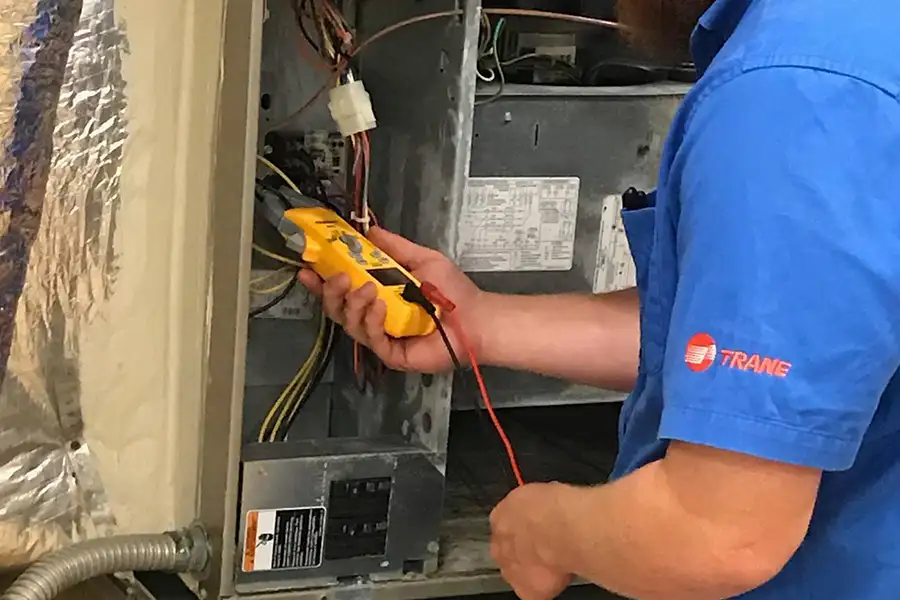
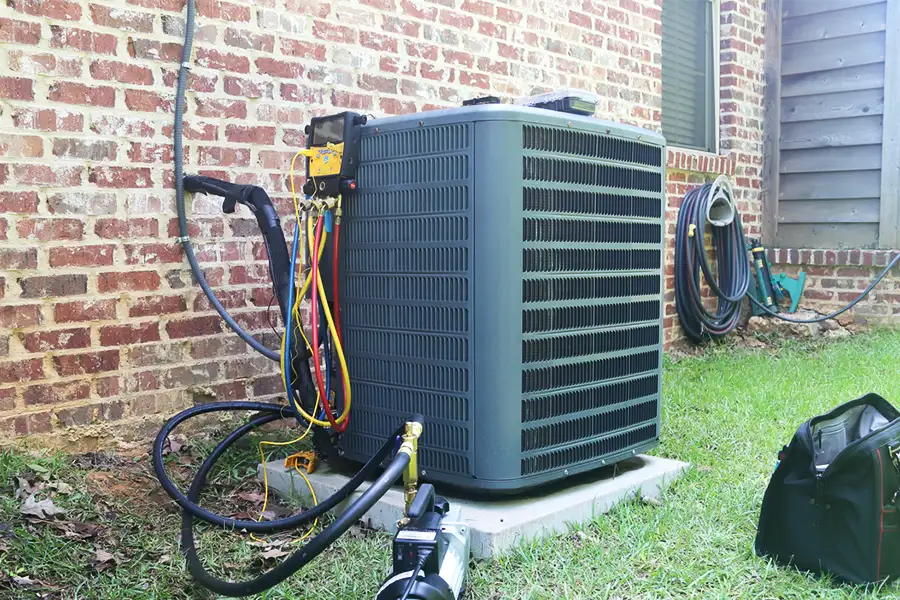
West Plano’s older neighborhoods present a challenge that is less about equipment failure and more about legacy decisions made decades ago. Ductwork installed in the 1970s and 1980s, before current energy codes existed, was often sized and routed for older equipment with different performance characteristics. When a new system is installed in one of these homes, it is frequently connected to a duct system that was never designed for it, resulting in chronic airflow imbalances and efficiency losses that a good equipment installation cannot fully overcome without ductwork correction.
East Plano presents a more familiar picture but at significant scale. The late-1990s and 2000s buildout that defined this part of the city produced tens of thousands of homes whose original HVAC systems are all aging through the same window simultaneously. That concentration of aging equipment means demand for repair and replacement services peaks sharply in Plano during summer, and homeowners who wait until the hottest week to call face the longest wait times. Getting ahead of the failure cycle with a spring inspection is one of the most practical things an east Plano homeowner can do.
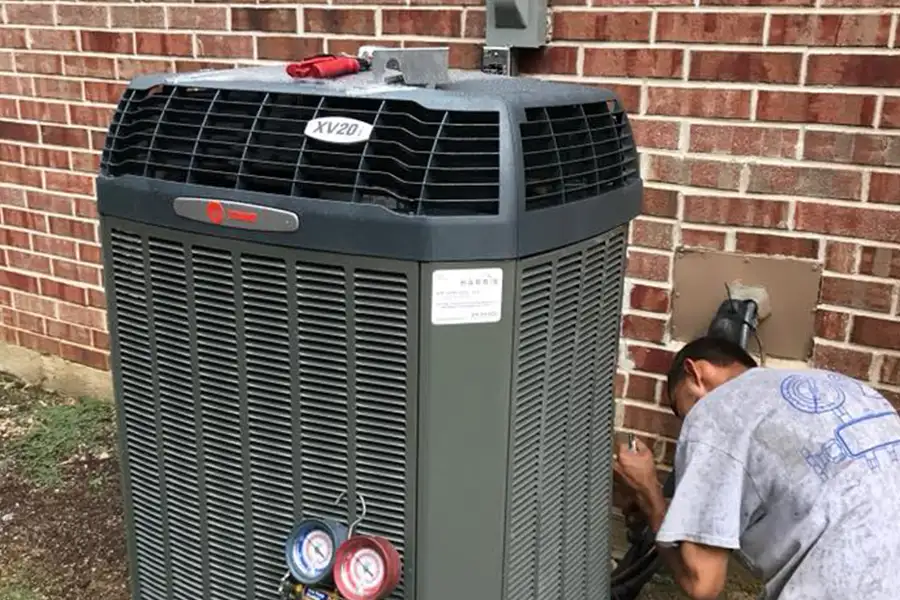
Donna noticed a circular water stain forming on her living room ceiling in July and immediately called us. Her air handler was installed in the attic above that room, and she was worried about the damage that might already have been done. She had been home all day and had not heard any dripping.
The technician found the condensate drain line had been partially blocked for long enough that the drain pan had filled and begun overflowing slowly through a seam in the pan itself. The float switch that was supposed to shut the system off when the pan filled was not functioning. The drain line was flushed clear, the float switch was replaced, and the pan seam was sealed. The technician also measured how much ceiling material had been affected and recommended Donna have the drywall inspected for moisture damage before it was repainted. The repair was straightforward, but the float switch failure was the detail that turned a nuisance into a property damage situation. Donna appreciated the thorough walkthrough of what had actually happened.
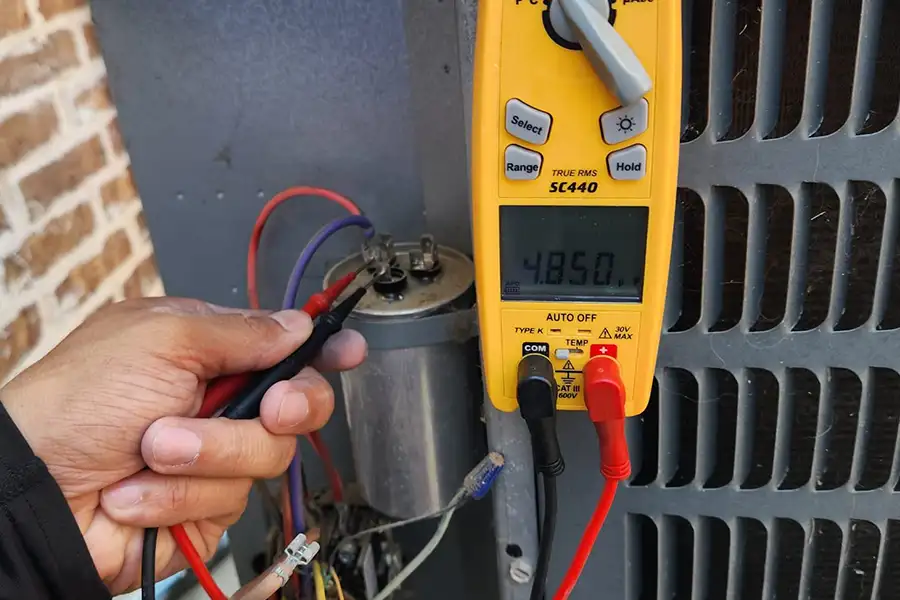
Plano is a large, competitive market with no shortage of HVAC companies. What keeps homeowners calling us back is not a promotional price or a clever marketing claim. It is the experience of working with technicians who showed up prepared, diagnosed the actual problem, explained it clearly, and fixed it correctly the first time.
We have worked in enough Plano homes to know that the city deserves technicians who take the work seriously. That is the standard we hold ourselves to on every call.
Not necessarily, but it should be evaluated. Ductwork from the 1970s and 1980s was sized and laid out for equipment with different airflow characteristics than what is installed today. When newer, higher-efficiency equipment is connected to older ductwork, the mismatch can result in static pressure problems, airflow imbalances, and comfort issues that a quality equipment installation cannot fully compensate for. A technician can measure static pressure and airflow at the registers to determine whether the existing ductwork is limiting the performance of the current system. Sometimes targeted repairs or additions resolve the issue. In other cases, a partial or full duct replacement is the right answer.
In most cases, this points to a condensate overflow from the attic air handler. When the condensate drain line is clogged or the drain pan is cracked, the condensate that accumulates during normal cooling operation has nowhere to go and overflows into the ceiling space above. The float switch that is designed to detect this condition and shut the system off either was not installed, was installed incorrectly, or has failed. The water stain on your ceiling is the visible result of a situation that may have been occurring for days or weeks. Call for service and shut the system off at the thermostat in the meantime to limit additional water introduction into the ceiling cavity.
As a fully built-out city, Plano has a more pronounced urban heat island effect than less developed communities to the north. Ground-level temperatures in dense urban areas run measurably higher than in open or partially developed terrain because pavement, rooftops, and buildings absorb and re-radiate heat that would otherwise be moderated by soil and vegetation. This means outdoor condenser units in Plano are rejecting heat into a hotter ambient environment than they were when many of the city’s homes were originally built. Systems that were adequately sized for the conditions of 1998 or 2003 Plano are operating in a thermally more demanding environment today.
Yes, and the case for it is stronger in Plano than in many other markets. Because such a large portion of the city’s housing stock is aging through the same replacement window simultaneously, demand for HVAC repair services peaks sharply during the first serious heat waves of summer. Homeowners who schedule a spring maintenance visit get their systems evaluated and any developing problems addressed before that peak demand period, when appointment wait times are longest and temperatures are least forgiving. A tune-up that catches a failing capacitor or a partially clogged drain line in April costs far less in time, money, and discomfort than an emergency call in August.
A tune-up is a scheduled maintenance visit performed on a system that is operating normally. It involves cleaning components, checking refrigerant levels, testing electrical components, verifying airflow, and identifying any developing issues before they cause a failure. A diagnostic visit is a service call for a system that is already experiencing a specific problem. The technician focuses on identifying the cause of the symptom and recommending the appropriate repair. Some visits involve both: a system that is operating but performing poorly may need a diagnostic to identify the underlying cause before the maintenance work is completed. Our technicians will tell you clearly at the start of the visit what the call will involve.