
Buy a new filter here
Easy Financing Options


Princeton has been one of the most actively developing cities in eastern Collin County over the past several years, and the pace of that growth has produced a housing stock with a distinctive split character. Older homes near the original downtown and along State Highway 380 have been standing through decades of Texas weather. A few miles away, entire new subdivisions are still under construction, with freshly installed HVAC systems that have yet to see their first full summer. Between those two extremes is a middle tier of homes built in the 2000s and early 2010s that are now entering the stage where original equipment starts failing in meaningful ways.
That range of housing ages means Princeton homeowners are dealing with three very different sets of HVAC circumstances depending on where in the city they live, and our technicians are equipped to handle all of them.

Princeton’s growth rate and housing diversity generate a wide range of service calls. Here is what we handle most regularly in this market.
Most repairs are completed in a single visit. Our technicians carry the parts most commonly needed across the equipment generations present in Princeton so you are not waiting days for a return trip.
Princeton sits on open eastern Collin County terrain where wind-driven dust and debris reach outdoor HVAC units with little resistance. Combined with the clay soil that dominates this part of the region, the conditions here accelerate wear in ways that produce recognizable symptoms worth addressing before they compound.
Standing water in the drain pan is a situation that needs same-day attention. Water that has been sitting in the pan long enough to be visible has likely already reached overflow level at some point, and ceiling or wall damage may already be occurring.
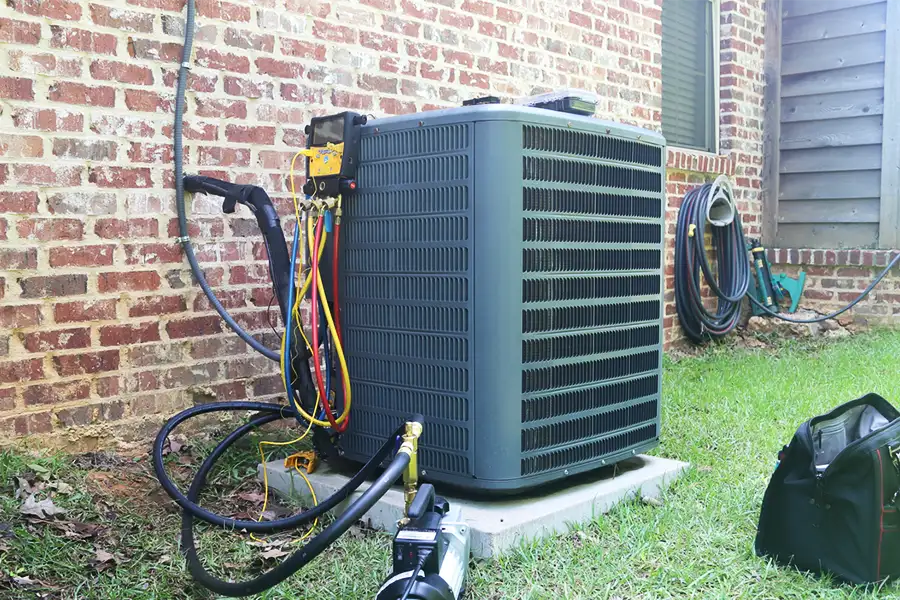
Princeton’s recent and rapid expansion has brought a pattern that shows up across fast-growing Texas cities: new homes built to meet surging demand, sometimes with HVAC installation decisions made under schedule pressure rather than careful engineering. Equipment chosen for cost over capacity, ductwork sealed minimally to pass inspection, and refrigerant charges that were close enough at startup but not precisely calibrated, these installation shortcuts tend to surface as performance problems within the first three to five years, right around the time the builder warranty has expired.
Princeton’s eastern Collin County location also places it in a stretch of the Blackland Prairie where clay soil movement is among the most pronounced in the region. Homes on slab foundations experience measurable seasonal movement as the clay swells with spring rain and contracts through summer drought. That movement works on attic ductwork connections over time, loosening joints that were adequately sealed at installation. A home that is three years old can already have duct leakage contributing silently to higher bills and reduced comfort.
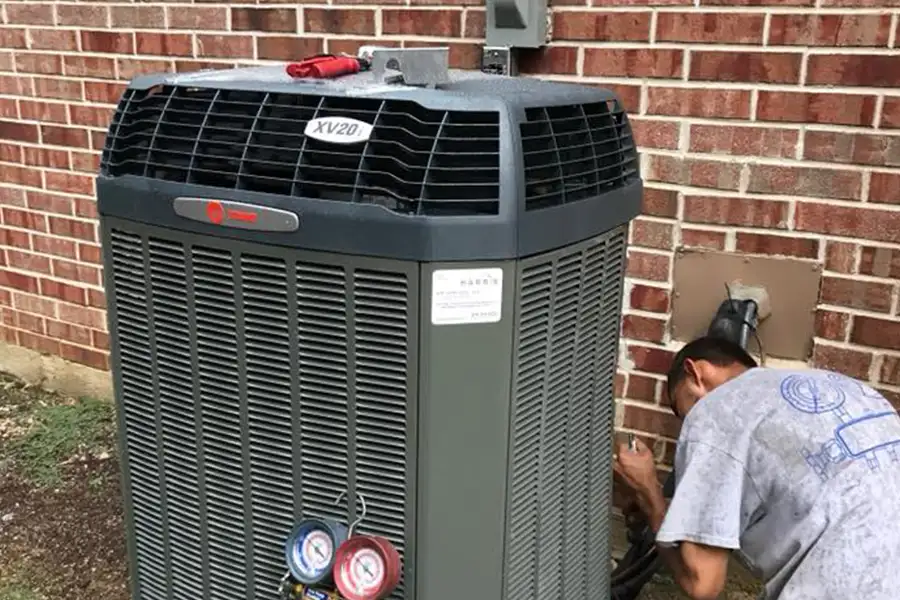
Angela bought her home in one of Princeton’s newer subdivisions off Beauchamp Boulevard two years before she called us. The house had never cooled perfectly, but she had assumed the Texas heat was simply overwhelming the system on the hottest days. When her neighbor mentioned their similar home stayed consistently cool without the same struggles, she decided to get a second opinion on what was actually going on.
The technician found two issues that had likely been present since installation. The refrigerant charge was about 12 percent low, which reduced the system’s cooling capacity on peak demand days. More significantly, three of the flex duct connections at the plenum were not fully sealed, sending a portion of conditioned air into the attic rather than the living space. Neither problem would have been obvious without a focused diagnostic. The duct connections were sealed, the refrigerant was brought to the correct charge, and the system cooled the home properly for the first time since Angela had moved in. She was frustrated the issues had not been caught sooner but relieved to finally have an explanation.
In a city growing as fast as Princeton, not every contractor operating here has deep roots in the community or real familiarity with its housing stock. We do. Our technicians understand the equipment generations common in Princeton’s neighborhoods, the installation patterns that produce recurring problems in newer builds, and the wear signatures that show up in the older homes closer to downtown.
Princeton homeowners deserve service from a company that is going to be here long after the job is done. We stand behind our work and we are straightforward about what we find.
It is more common than it should be in rapidly developed markets. New construction HVAC installations are sometimes completed under time pressure with less precision than a dedicated service installation. A refrigerant charge that is slightly low at commissioning, duct connections that were not fully sealed, or equipment that was sized using a simplified estimate rather than a proper load calculation can all result in a system that performs adequately under mild conditions but falls short on the hottest days. If your home has never felt quite right since you moved in, a diagnostic visit can identify whether there is a correctable installation issue behind the problem.
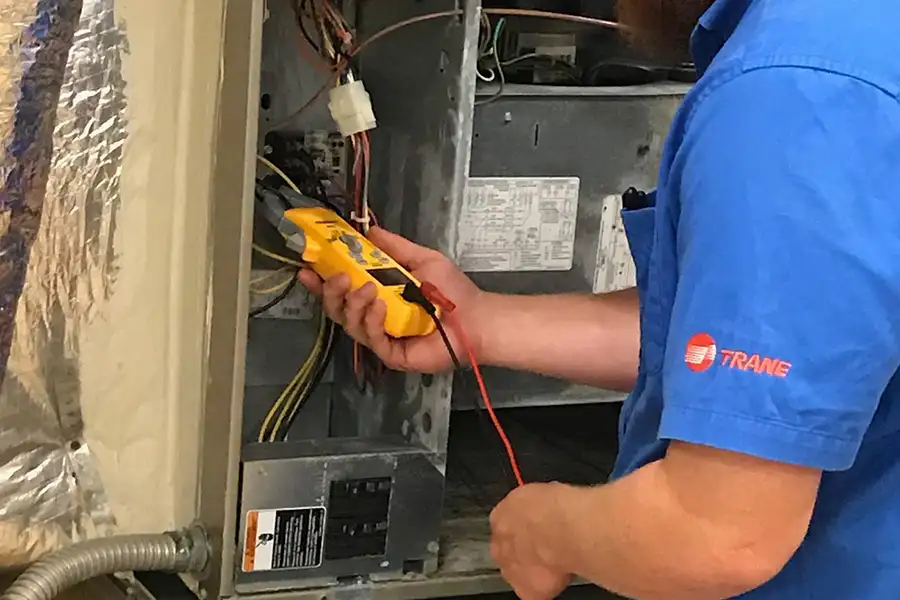
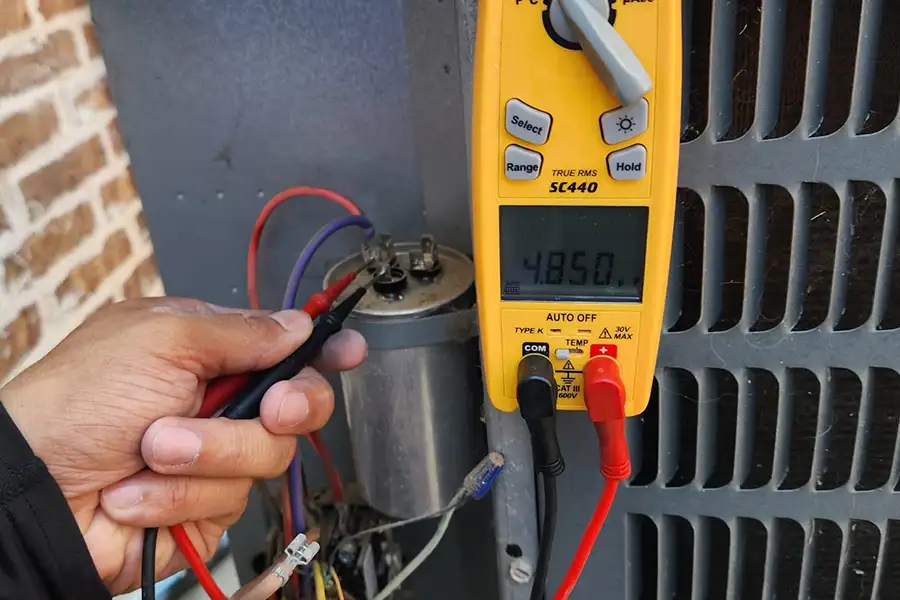
When the condenser fan runs but the compressor does not engage, the most common cause is a failed run capacitor. The capacitor supplies the electrical boost needed to start the compressor motor, and when it fails the fan motor, which has a separate winding, may continue running while the compressor sits idle. The result is a system that appears to be running but is not actually cooling. A failed capacitor is one of the more straightforward repairs in HVAC service and is typically resolved in a single visit. Left unaddressed, the compressor attempting to start and failing repeatedly can cause additional electrical damage.
The expansive clay soil that underlies most of eastern Collin County swells and contracts significantly with changes in moisture content. On a slab foundation, that seasonal movement translates into small but cumulative shifts in the structure above it. Flex duct connections in the attic, particularly at the air handler plenum and at register boot connections, are subject to this movement over years of seasonal cycling. Connections that were adequately sealed at installation can work loose over time, creating air leaks that reduce the volume of conditioned air reaching the living space. Homes three to seven years old in Princeton are often at the age where this first becomes measurable.
Yes, particularly on peak demand days when the system is already working near capacity. Refrigerant charge affects the temperature of the evaporator coil, the rate at which heat is absorbed from indoor air, and the system’s ability to remove humidity. A charge that is 10 to 15 percent low may perform acceptably on a mild day but fall noticeably short when outdoor temperatures push past 100 degrees and the system needs every bit of its rated capacity. A low charge also means the compressor runs hotter than designed, which accelerates wear over time. Correcting the charge to the manufacturer’s specification is a precision task that makes a real difference in both comfort and equipment longevity.
The more context you can provide, the faster the diagnostic typically goes. Useful information includes when you first noticed the problem, whether it is constant or intermittent, which parts of the house are affected, whether the system is making any unusual sounds, when the filter was last changed, and whether anyone has worked on the system recently. If you know the age of the system or have any paperwork from previous service visits, that is also helpful. You do not need to diagnose the problem yourself, but the behavioral history of the issue gives the technician a starting point that can significantly narrow down the possibilities before they even look at the equipment.