
Buy a new filter here
Easy Financing Options


Sachse occupies a narrow strip of land straddling the Dallas and Collin County line, and its residential character reflects a community that filled in steadily from the late 1980s through the mid-2000s. Unlike its faster-growing neighbors to the north, Sachse is largely built out, which means the housing stock here is mature and the HVAC systems inside most homes are deep into their service lives. Original equipment installed when Sachse’s subdivisions were new is now 20 to 35 years old, putting the community squarely in the replacement and major repair phase that follows long decades of continuous North Texas operation.
Our technicians know what aging systems in Sachse look like and what they typically need. We do not approach these calls with a generic checklist. We come prepared for the equipment generations that defined this community’s buildout.

Sachse’s established housing stock drives a repair profile that leans heavily toward aging component failures and end-of-life assessments. These are the calls we receive most often in this community.
We understand that Sachse homeowners dealing with an older system often face a real decision between repair and replacement. We give you the information to make that call without pressure from either direction.
There is a difference between a system that needs a repair and a system that is telling you it is running out of time. In Sachse, where so many systems are in their third decade, that distinction matters. These symptoms can signal either situation, and knowing which one applies changes the right response.
Repeated repairs within a short window are one of the clearest signals that a system is in a decline phase rather than experiencing isolated component failures. Our technicians will tell you honestly where your system falls on that spectrum.
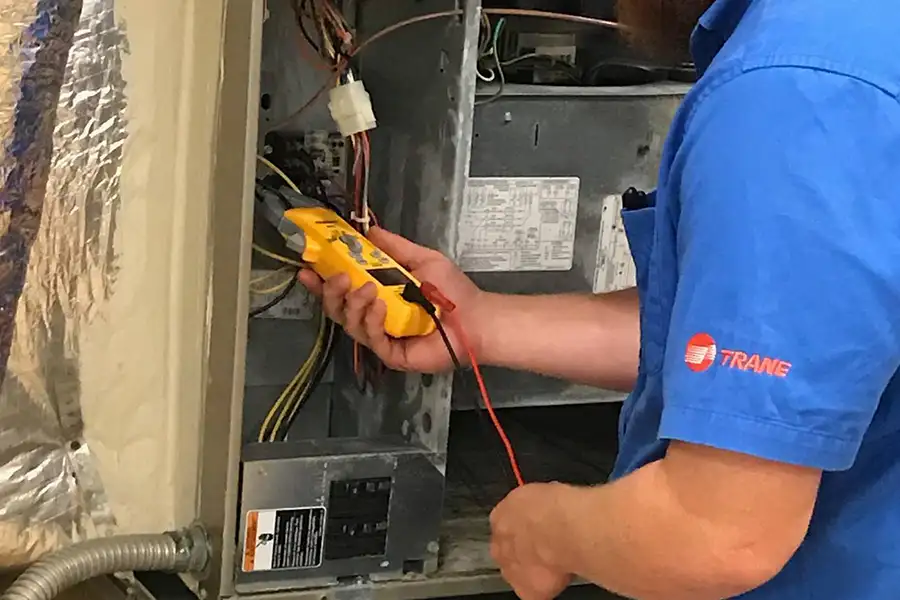
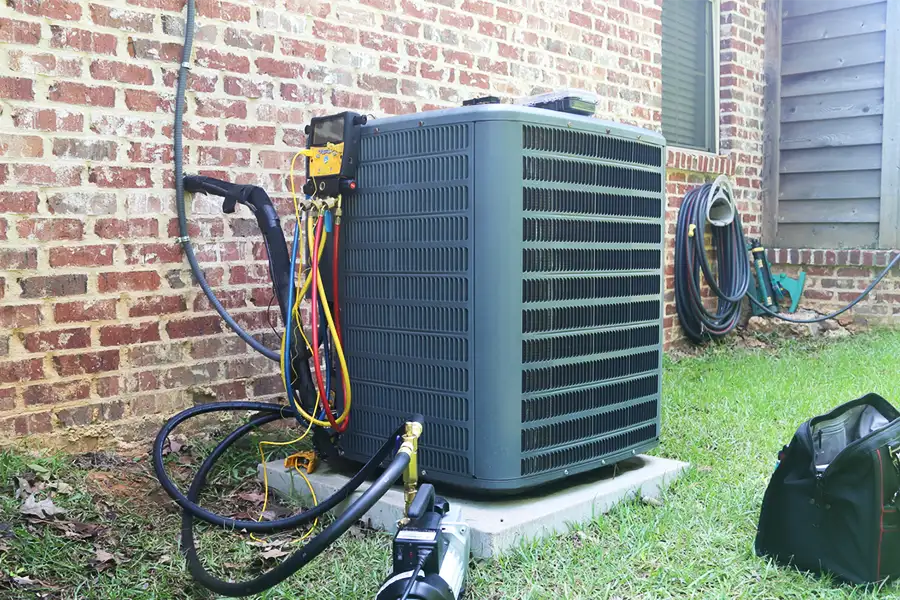
Sachse’s position at the Dallas-Collin County boundary means its homes experience the full intensity of the DFW climate without the benefit of the newer, higher-efficiency infrastructure that younger cities have built. Homes here were constructed when insulation standards were lower, window efficiency was inferior to current products, and HVAC systems were sized to the conventions of their era. Equipment that has been compensating for those building envelope shortcomings through 25 or 30 Texas summers has accumulated wear at a rate that shorter-lived systems in newer homes simply have not experienced.
The Lake Ray Hubbard reservoir system, which borders Sachse to the east and southeast, contributes a humidity profile that is measurably higher than the drier inland portions of the county. Evaporator coils in Sachse homes near the lake corridor process more moisture per cooling cycle than their counterparts in drier western markets, and the cumulative effect on drain systems, coil surfaces, and the biological cleanliness of the air handler is significant over a 20-plus-year period. Systems that have never had a coil cleaning or drain system service in that timeframe are operating with meaningful efficiency and air quality penalties.
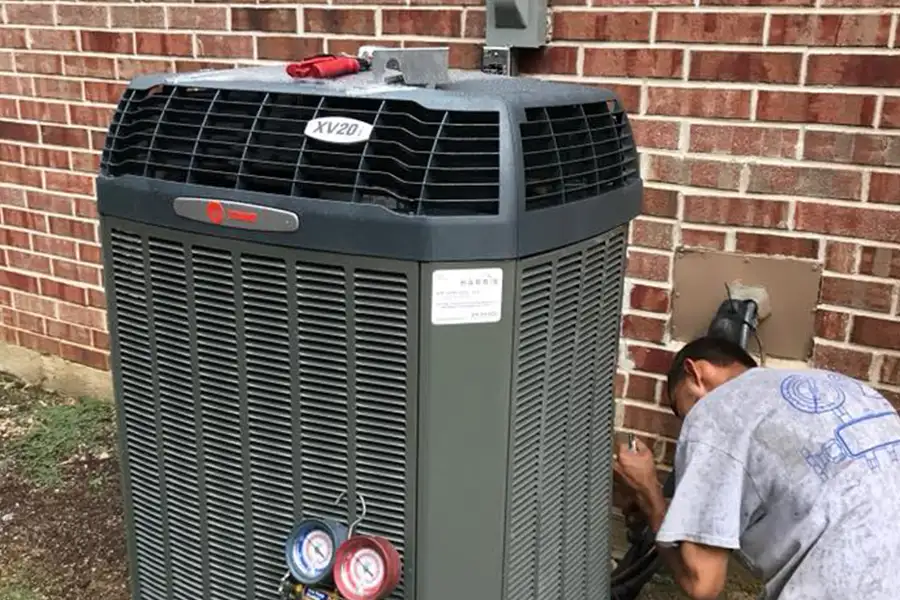
Victor called us in late June after his system stopped cooling the house below 79 degrees even overnight when temperatures dropped into the mid-70s outside. The system was 24 years old and had been running without any service visits for at least the past four years. He had been putting off the call because he was bracing for bad news.
The technician found a system that had been operating in declining condition for an extended period. The evaporator coil had significant biological growth reducing its efficiency, the refrigerant charge was well below the correct level from a slow leak, and the condenser coil was heavily fouled. Remarkably, the compressor itself was still functional. The coils were cleaned, the leak was located and sealed at a corroded fitting, and the system was recharged. The improvement was substantial. Victor’s house was cooling normally by that evening. The technician gave him a candid assessment of the compressor’s remaining expected life and recommended a planning timeline for replacement, which Victor appreciated far more than an ambiguous answer would have.
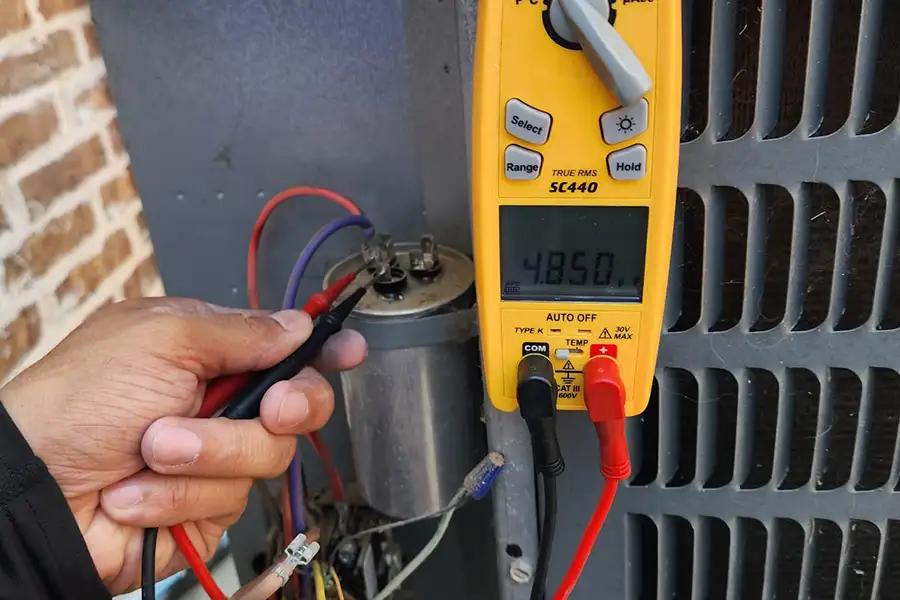
Dealing with a 20-year-old HVAC system requires a technician who can give you a straight answer, not just a repair quote or a replacement pitch. Sachse homeowners deserve to know the honest condition of their equipment, what a repair will realistically extend, and when the math tips toward replacement. That is the conversation we have on every Sachse call where the system’s age is a factor.
We have given a lot of honest assessments in Sachse over the years. Some of them have led to repairs that bought the homeowner another few good years. Some have led to planned replacements on the homeowner’s timeline rather than an emergency replacement in August. Both outcomes are the right one when the information is accurate.
At 24 years, the decision depends almost entirely on the nature of the repair. If the system needs a minor component like a capacitor, contactor, or a drain line service, completing that repair is reasonable if the rest of the system is in acceptable condition. If it needs a compressor, evaporator coil, or heat exchanger, the repair cost relative to the remaining expected life of the system almost always favors replacement. At that age, even a successful major repair leaves you with a 24-year-old system whose remaining lifespan is measured in months to a couple of years at most. Our technicians will tell you which category your system falls into before recommending anything.
Biological growth on an evaporator coil, which is common in humid environments like those found in Sachse homes near Lake Ray Hubbard, creates a layer of material on the coil surface that reduces heat transfer efficiency. The coil has to work harder to absorb the same amount of heat from the air passing over it, which means longer run times, higher energy consumption, and reduced cooling capacity on peak demand days. The growth also contributes to musty odors distributed through the ductwork and can affect indoor air quality. Coil cleaning removes this material and restores the heat transfer efficiency the coil was designed to deliver.
Proximity to the lake means ambient outdoor humidity is consistently higher than in more inland areas of the county, particularly during morning hours and following rain events. For HVAC systems, this translates into heavier condensate production during every cooling cycle, which puts more demand on drain pans and condensate lines. It also means evaporator coil surfaces stay wetter for longer periods between cycles, which creates more favorable conditions for biological growth. Homes in the eastern portions of Sachse closest to the lake corridor benefit from more frequent drain line flushing, annual coil inspection, and consistent filter maintenance compared to the standard recommendations for drier locations.
In a home with a system that is 20 or more years old, the ductwork is typically that same age. Metal duct in older homes can develop corrosion, separations at joints, or collapsed sections over that span. Flex duct used in older installations often degrades faster than current materials do and may have sections that have partially collapsed or separated at connections. If the ductwork has never been inspected, there is a reasonable chance it is contributing to efficiency losses that get attributed to the equipment itself. Evaluating the duct system alongside the mechanical equipment gives a complete picture of what the home actually needs rather than addressing only half the system.
If you do not have service records that document a coil cleaning, you can ask a technician to inspect the coil visually during a service visit. A technician will access the evaporator coil through the air handler cabinet and can assess its condition directly. A coil that has never been cleaned on a system more than five to ten years old will typically show visible dust accumulation, organic material, or biological growth on the fin surfaces. The condenser coil outside can also be inspected visually for debris accumulation between the fins. If the coils show significant buildup, a cleaning should be part of the current service visit regardless of what other repairs are being performed.