
Buy a new filter here
Easy Financing Options


Wylie grew steadily through the 1990s and 2000s before beginning to slow as the city approached buildout, and that growth arc produced a housing stock that is now uniformly entering a critical maintenance window. The vast majority of Wylie’s residential neighborhoods were developed in a span of about 15 years, which means the city’s HVAC systems are aging through the same phase simultaneously. Original equipment installed during Wylie’s primary buildout is now 15 to 25 years old, and the repair and replacement calls that come from that age bracket are the defining service pattern in this market right now.
Our technicians understand Wylie’s housing generation and what it requires. We are not guessing at what equipment is likely to be present or what wear patterns to expect. We have been in enough Wylie attics and mechanical rooms to know this community’s HVAC picture well.
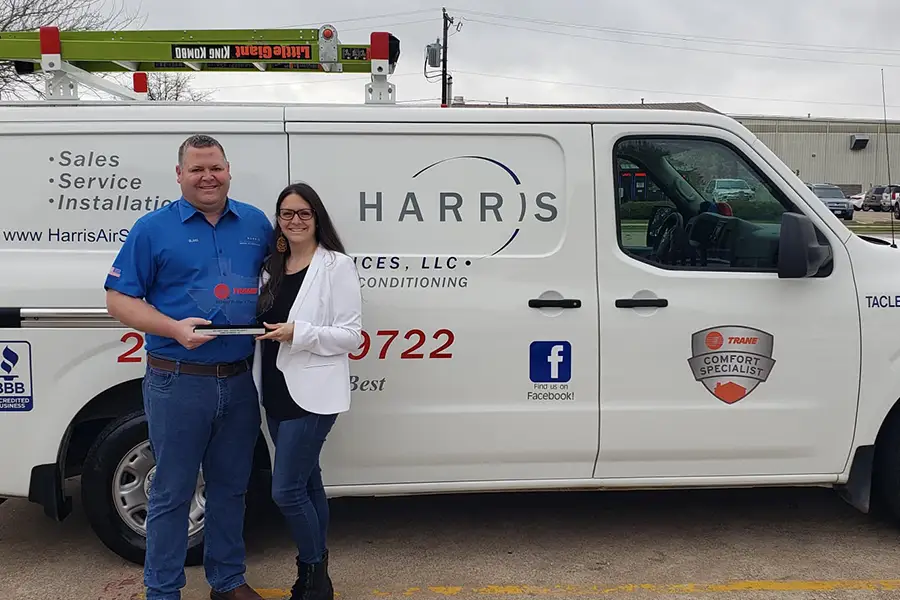
Wylie’s concentrated housing age means service calls here cluster around the repair types that are most common when systems are in the 15 to 25-year range. These are what we see most often.
For Wylie homeowners whose systems are at the edge of economic repair life, we provide clear guidance on what a repair will realistically extend and when planning for replacement makes more sense than continuing to invest in aging equipment.
Wylie sits along the southwestern edge of Lake Lavon, and the humidity that comes off the reservoir affects how HVAC systems behave here differently than in drier parts of the county. These symptoms are worth acting on rather than waiting to see if they resolve.
A system that performs adequately in the morning but loses ground as the day heats up is often operating near the edge of its remaining capacity. That pattern typically points to refrigerant loss, a fouled coil, or a compressor that is aging out of its efficiency range.
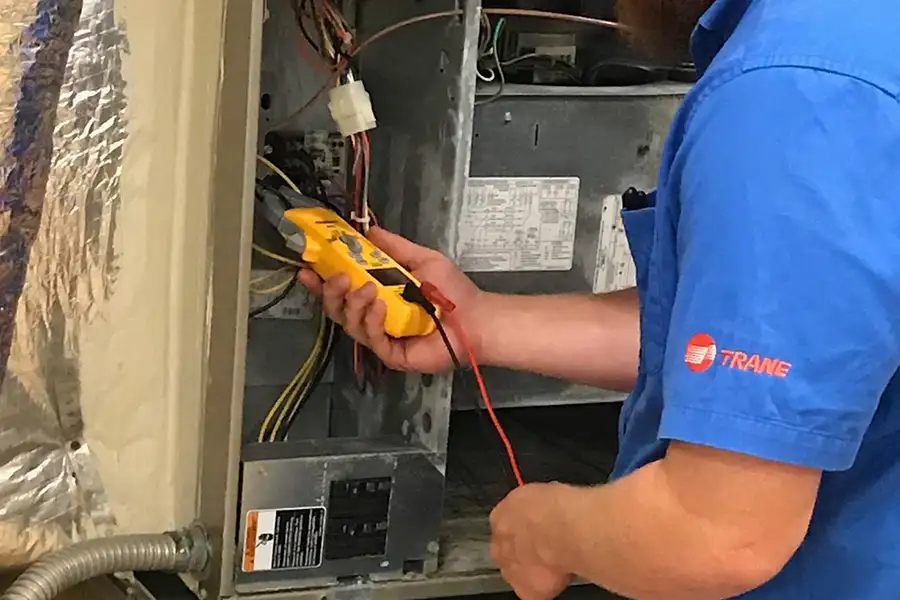

Wylie’s geography along the Lake Lavon shoreline and the East Fork Trinity corridor creates a localized humidity environment that distinguishes it from the drier stretches of western Collin County. That ambient moisture load has compounding effects on residential HVAC systems over time. Evaporator coils that process higher humidity volumes produce more condensate, which means drain systems in Wylie homes see heavier use than comparable systems in drier markets. Drain lines that go years without being flushed accumulate algae and mineral deposits faster under these conditions, and the resulting clogs overflow drain pans at a higher rate than homeowners typically expect.
The lake proximity also influences how outdoor condenser units age. Higher ambient humidity accelerates corrosion on condenser coil fins and cabinet surfaces over the long run, and for Wylie’s 20-plus-year-old systems, that corrosion is now visible and measurable. A corroded coil transfers heat less efficiently and is more prone to developing refrigerant leak points at the fin-to-tube connections. Homeowners with systems in this age range benefit from having coil condition assessed as part of any service visit, not just when a specific complaint is present.
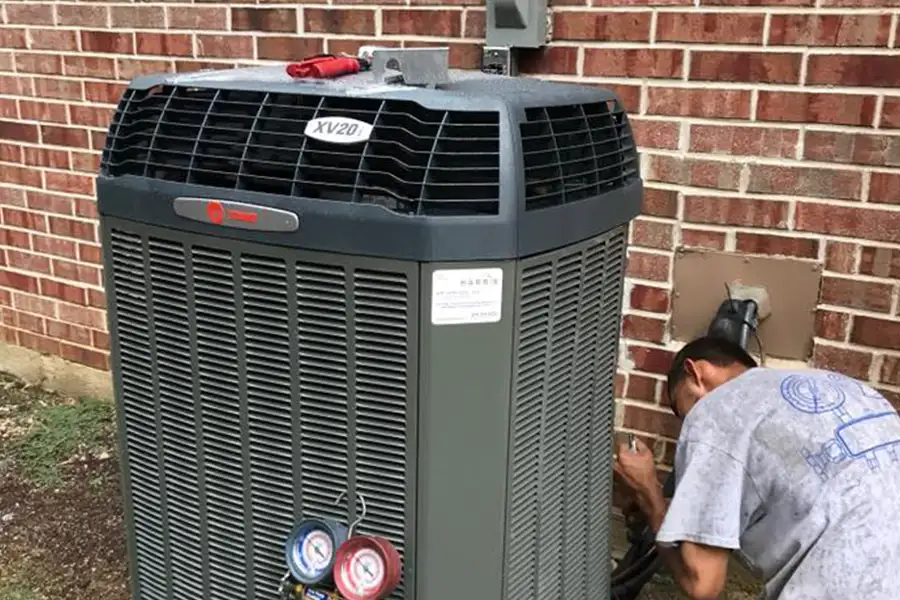
Lisa had noticed for two summers that her home in the Bozman Farms area cooled fine through the morning hours but started falling behind around 2 p.m. By late afternoon the house was running two to three degrees above the thermostat setting, and the system would not recover until the evening temperature dropped. She had been adjusting her thermostat schedule around the problem rather than investigating it.
The technician arrived on a warm morning and ran a full system evaluation. The refrigerant charge was low enough to reduce capacity but not so low that the system failed entirely, which explained why mornings were manageable and afternoons were not. As outdoor temperatures climbed and the thermal load on the home increased, the system’s reduced capacity could no longer keep pace. The condenser coil was also showing the early corrosion patterns common in lake-adjacent Wylie homes of that age, with some fin degradation reducing heat rejection efficiency. The refrigerant leak was located and sealed, the system was recharged, and the coil was cleaned. Lisa’s afternoon problem disappeared, and she had a clear picture of what to monitor as the system continued to age.
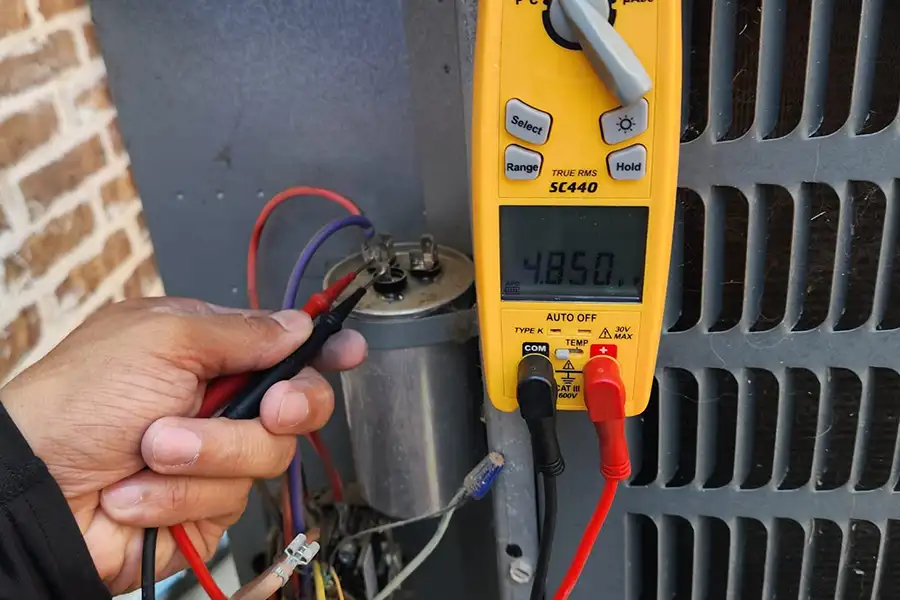
Wylie is a community where most homeowners are dealing with the same aging equipment challenge at the same time. In that environment, the value of a trustworthy technician is higher than usual because the decisions being made, repair now, replace on a planned timeline, defer and monitor – have real financial consequences. We give Wylie homeowners the honest context they need to make those decisions well.
We have built our reputation in this part of Collin County by being straight with people. That is not a marketing claim. It is the only approach that works when you are dealing with homeowners who are making significant decisions about equipment they have owned for two decades.
This is a classic symptom of a system operating near the edge of its capacity. In the morning, outdoor temperatures are lower and the thermal load on the home is manageable. As the day heats up, the load increases and a system with reduced capacity, due to low refrigerant, a fouled coil, or a compressor losing efficiency, reaches its performance ceiling and falls behind. The gap between what the thermostat is set to and what the home actually reaches widens as the afternoon peak builds. Identifying which component is responsible for the capacity reduction is what a diagnostic visit accomplishes.
For homes in the Wylie area near Lake Lavon, annual flushing is a minimum and twice-yearly is a more appropriate interval given the higher humidity environment. Condensate drain lines accumulate algae growth faster in humid conditions, and a line that is partially clogged may not overflow during a dry stretch but will back up quickly during a sustained humid period. Including a drain line flush and pan inspection as part of both the spring and fall maintenance visits is the most reliable way to prevent condensate overflows and the ceiling or wall damage that follows.
Condenser coil corrosion in lake-adjacent communities like Wylie develops over time as the aluminum fins and copper tubes that make up the coil are exposed to higher ambient humidity and airborne moisture over years of operation. As the fin surface corrodes, heat transfer efficiency decreases because corroded metal conducts heat less effectively than clean metal. Advanced corrosion can also create pinhole refrigerant leaks at the fin-to-tube connections, which are difficult to locate and repair. A technician can assess the degree of corrosion during a service visit and advise on whether the coil condition is affecting performance measurably or is at a stage where close monitoring is the right approach.
On a system in the 15 to 25-year range, an unserviced summer in North Texas carries meaningful risk. Capacitors and contactors that are past their rated lifespan can fail without warning on the hottest day of the year. A refrigerant leak that has been progressing slowly can reach a level where the compressor overheats and fails. A condensate drain line that has been partially clogged can overflow during a humid stretch and cause ceiling damage. None of these outcomes are inevitable, but each becomes more likely the longer service is deferred on aging equipment. A spring inspection visit that identifies a developing issue costs a fraction of an emergency repair or a flood damage claim.
The clearest signal is when repair costs for a single incident approach or exceed 30 to 50 percent of a replacement system’s cost, particularly if the system has already had significant repairs in recent years. A second signal is when the type of repair needed, a compressor, a coil, or a heat exchanger, involves components whose failure on an aging system often precedes or accompanies other failures. A third is when the system uses a discontinued refrigerant that makes future recharging expensive. Our technicians will walk through these factors honestly at the time of the diagnostic, giving you the information to plan on your timeline rather than react when the next failure happens.