
Key Takeaways:
- Most air conditioners last between 10 and 15 years, though Texas heat can shorten that range.
- The type of system, energy efficiency rating, and maintenance history all affect AC lifetime.
- Annual professional tune-ups are the single most effective way to extend your system’s life.
- Knowing the signs of a failing AC helps you plan a replacement before a breakdown happens.
- Harris Air Services helps McKinney homeowners get the most out of their cooling systems.
Texas families know better than most how essential a reliable air conditioner is. From late spring through early fall, AC systems in McKinney and across the DFW area run almost continuously, handling heat and humidity levels that push equipment harder than in most other parts of the country. That kind of sustained demand raises a practical question every homeowner eventually asks: how long do air conditioners last in Texas, and when should you start thinking about a replacement?
In this guide, the HVAC experts at Harris Air Services break down the average AC lifetime, the factors that influence how long your system will last, and what you can do to protect your investment for as long as possible.
What Is the Average Life Span of an Air Conditioner?
How long do AC units last in Texas? The general answer is between 10 and 15 years, but that range is not fixed. Several variables determine where your system lands within that window, and in some cases, whether it surpasses it entirely.
According to the U.S. Department of Energy, a central air conditioner that receives regular professional maintenance can reliably reach the upper end of that range. Systems that are neglected or undersized for their home often fall short of the 10-year mark. In the North Texas climate, where equipment runs for months at a stretch, understanding what affects longevity is especially important.
The three main factors that determine how long your AC will last are the type of system you have, its energy efficiency rating, and how consistently it is maintained.
The Type of Air Conditioner
How long HVAC systems last in Texas depends partly on the type of equipment installed. Central air conditioners generally have the longest AC lifetime of the common residential options, often reaching 15 years or more with proper care.
Ductless mini-split systems and heat pumps tend to fall in the 10 to 12-year range. This is partly because these systems handle both heating and cooling year-round, which adds to total operational hours over their lifetime. That said, both system types can exceed their average life span with consistent professional servicing.
The Unit’s Energy Efficiency
Energy efficiency plays a meaningful role in how long an air conditioner lasts. Higher-efficiency systems, those with better SEER ratings, are designed to deliver more cooling output per unit of energy consumed. This means the compressor and other components operate under less thermal stress, which reduces wear over time.
In McKinney’s climate, where systems run hard from May through September, that reduced strain matters. According to Energy Star, high-efficiency certified equipment consistently outperforms standard units in both performance and durability. If your current system has a low SEER rating, upgrading to a more efficient model is not just an energy savings decision. It is also a long-term investment in reliability.
Does Texas Heat Shorten AC Life Span?
The short answer is yes. How long air conditioners last in Texas is a different question than how long they last in a milder climate. McKinney summers routinely push outdoor temperatures into the upper 90s, and humidity levels add additional strain on the refrigerant cycle and electrical components.
When an AC runs nearly nonstop for four to five months per year, it accumulates operational hours far faster than a system in a cooler region. That accelerated wear is why routine maintenance is not optional in Texas. It is the primary reason some systems reach 15 years while others need replacement at 10.
How To Make Your AC Last Longer in Texas
Understanding the average AC lifetime is useful, but knowing how to extend it is what actually protects your investment. Two areas have the biggest impact.
Annual AC Maintenance
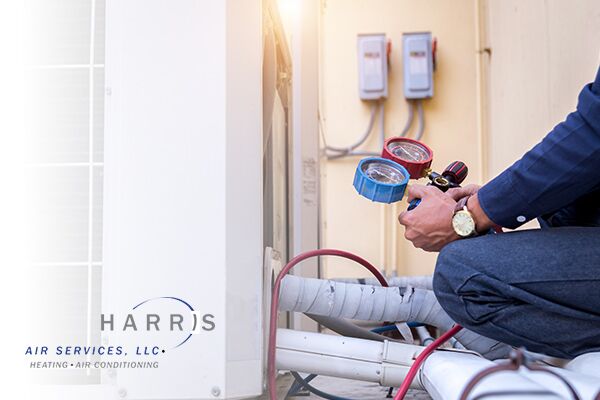
Having your system professionally serviced each spring ensures it enters the summer season at peak efficiency. In our service calls throughout McKinney, neglected maintenance is consistently the most common reason systems fail prematurely.
During a professional tune-up, a technician will typically:
- Inspect and replace air filters as needed
- Clean evaporator and condenser coils
- Lubricate mechanical components
- Tighten electrical connections
- Check and recharge refrigerant levels
- Inspect the condensate drain for blockages
- Identify minor issues before they develop into costly repairs
Scheduling professional AC maintenance once a year, ideally before the heat of summer arrives, is the single most effective step a homeowner can take to extend their system’s life span.
Insulation and Duct Sealing
When a home is poorly insulated or has leaky ductwork, the AC works harder than necessary to maintain a consistent indoor temperature. That extra effort adds up over thousands of hours of runtime. Addressing insulation gaps and scheduling air duct sealing reduces the load on your system and improves the efficiency of every cooling cycle. In older McKinney homes especially, duct leakage is a common and frequently overlooked factor in both high energy bills and shortened equipment life.
Signs It’s Time To Replace Your AC
Even with good maintenance, every system reaches the end of its useful life. Knowing the signs helps you plan a replacement on your timeline rather than in the middle of a July breakdown.
Watch for these indicators:
- Your unit is over 15 years old. At this point, efficiency has declined and the risk of major component failure rises significantly.
- Repairs are becoming frequent and expensive. If the cost to repair your system is approaching 50% of the cost to replace it, replacement is usually the smarter financial decision.
- Energy bills are rising without a change in usage. A system losing efficiency works harder and costs more to run.
- Uneven cooling or persistent humidity issues. These often signal that the system can no longer meet the demands of the home.
- Unusual noises or refrigerant leaks. Grinding, banging, or bubbling sounds, along with refrigerant issues, are common late-stage warning signs that repair may not be enough.
Is It Time to Replace Your AC in McKinney?
How long your air conditioner lasts depends on the system type, its efficiency, and how well it has been maintained over the years. In a climate like McKinney’s, proactive care makes the difference between a system that struggles past 10 years and one that comfortably reaches 15 or beyond.
Whether you need a tune-up to extend your current system’s life or you are ready to explore AC replacement options, Harris Air Services is here to help. We serve homeowners throughout McKinney, Allen, Frisco, Prosper, and the broader DFW area. Schedule your AC replacement today and let our team help you find the right solution for your home.
Frequently Asked Questions
- How long do AC units last in Texas compared to other states? Texas AC systems typically have a shorter effective life span than those in milder climates. The extended cooling season and high heat accelerate wear, making consistent maintenance even more critical here than in other regions.
- How long does an HVAC system last in Texas with regular maintenance? A well-maintained central AC system can reach 15 years or more. Skipping annual tune-ups is the most common reason systems fall short of that range.
- How long do ductless mini-splits and heat pumps last? Both typically last 10 to 12 years, though systems that receive regular professional servicing often exceed that estimate.
- What shortens the life span of an AC in McKinney? Skipped maintenance, dirty coils, clogged filters, leaky ductwork, and running an undersized system are the most common factors that reduce AC lifetime in local homes.
5. How do I know if it’s better to repair or replace my AC? A common guideline is the 50% rule: if the repair cost is 50% or more of what a replacement would cost, replacement is usually the better investment, especially if the system is already over 10 years old.